 United StatesJFK
 MexicoMEX
 BrazilGRU
 ArgentinaEZE
 ChileSCL
 ColombiaBOG
 PeruLIM
 PanamaPTY
 Costa RicaSJO
 Dominican RepublicPUJ
 JamaicaMBJ
 BahamasNAS
 BarbadosBGI
 United KingdomLHR
 IrelandDUB
 FranceCDG
 GermanyFRA
 NetherlandsAMS
 BelgiumBRU
 SwitzerlandZRH
 AustriaVIE
 ItalyFCO
 SpainMAD
 PortugalLIS
 GreeceATH
 TurkeyIST
 DenmarkCPH
 SwedenARN
 NorwayOSL
 FinlandHEL
 PolandWAW
 Czech RepublicPRG
 HungaryBUD
 IcelandKEF
 United Arab EmiratesDXB
 QatarDOH
 Saudi ArabiaRUH
 IsraelTLV
 EgyptCAI
 MoroccoCMN
 South AfricaJNB
 KenyaNBO
 NigeriaLOS
 IndiaDEL
 PakistanLHE
 Sri LankaCMB
 SingaporeSIN
 MalaysiaKUL
 ThailandBKK
 VietnamSGN
 PhilippinesMNL
 IndonesiaCGK
 Hong KongHKG
 ChinaPVG
 TaiwanTPE
 JapanHND
 South KoreaICN
 AustraliaSYD
 New ZealandAKL
What can a car actually do at Shibuya Crossing?
A car can bring you to the Shibuya Station area, wait while you cross on foot and go up to the observation deck, and take you on. It cannot stop at the crossing itself. For a Shibuya Crossing private tour with driver, the value is the airport run, the timing and the luggage.
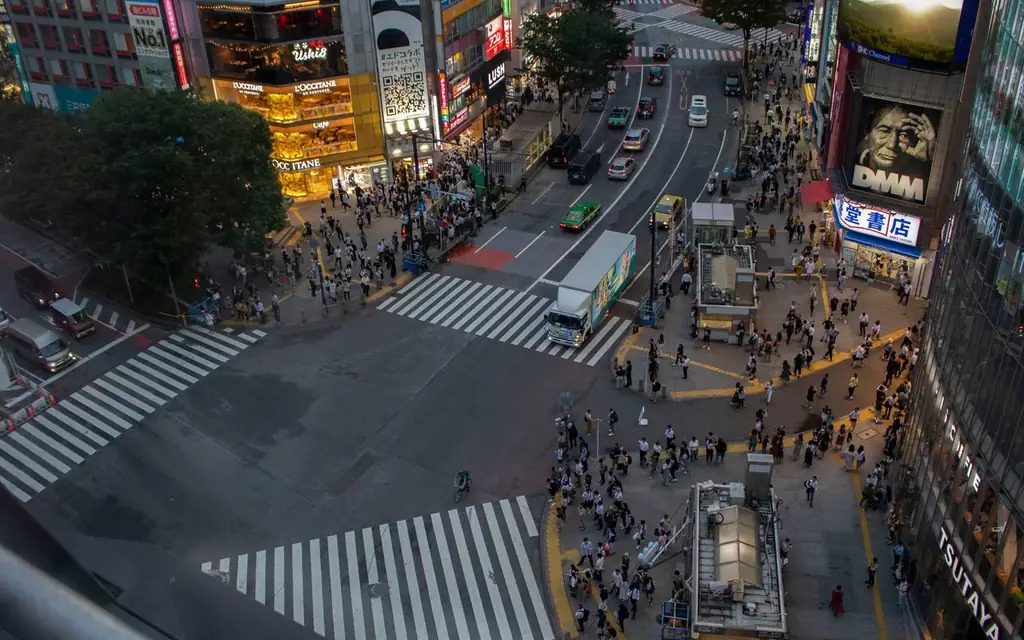
The scramble is a pedestrian event. When the lights turn, traffic on every approach stops and people cross in all directions, including diagonally. The Tokyo metropolitan tourism board calls it an iconic landmark where upwards of 1,000 people cross at once, and notes that pedestrians somehow avoid colliding. For a driver that means something simple: the intersection is the one place in the district where your vehicle will never be allowed to linger, because it is a signalled crossing in the middle of a major station plaza.
So the questions that matter are about everything around it. Where does the car stop? How long should the walk be? When do you go up to the rooftop for the view over the crowd? And how does Shibuya fit between an airport arrival and dinner? This guide answers those in order.
The crossing in plain terms
Shibuya Crossing sits directly outside the Hachiko Exit of Shibuya Station, in front of the Shibuya Center-Gai approach. The tourism board's spot page suggests starting at the station end and crossing toward Center Gai, which is the classic route. Shibuya Station is served by the JR lines, the Ginza Line, the Keio Inokashira Line and the Tokyu Toyoko Line, so the plaza is permanently busy with commuters.
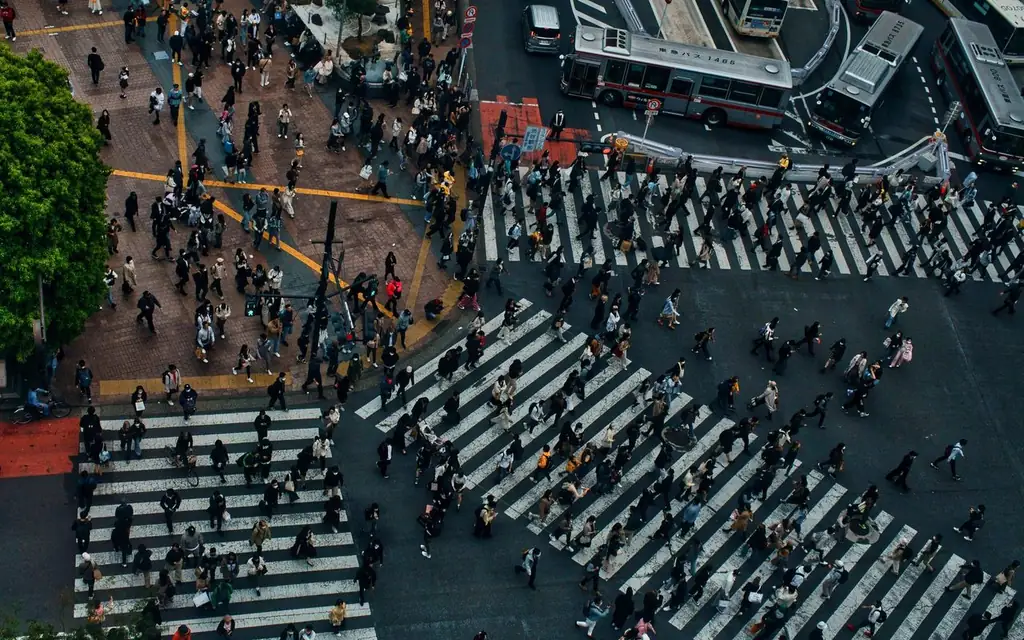
Two things surprise first-time visitors. First, the crossing itself is short: it takes well under a minute to walk across, and most of the experience is the build-up and the view. Second, the most memorable angles are not from street level. The tourism board points to the café directly above the crossing for crowd photographs, and to the rooftop deck at the top of Shibuya Scramble Square, which is directly connected to the station.
The surrounding blocks are neon, retail and entertainment: Center-Gai with its shops and restaurants, large department stores and the Hachiko statue near the exit. Treat the crossing as the doorway rather than the destination, and allow time for the rooftop and a meal.
The small stop that costs two minutes: Hachiko
Before or after the scramble, most visitors make a brief stop at the Hachiko statue, which the tourism board places at 2-1 Dogenzaka, close to the crossing. Hachiko was an Akita dog who went to Shibuya Station every day in the 1920s to meet his owner, and kept returning for nine years after the owner died suddenly at work. The statue is smaller than people expect, which is why the board suggests learning the story first. It is also the district's standard meeting point, so it is crowded at almost any hour, and a group that has agreed to meet "at Hachiko" should add a second fallback location in case the plaza is too full to find each other.
For a chauffeured party, the statue is a useful anchor. Agree that the car will wait on the roads away from the plaza, that you will walk to the statue and the crossing together, and that the chauffeur will meet you at a named corner once you message. You can read the board's page on the Hachiko statue and its entry for the Shibuya Scramble Crossing before you go.
Reaching Shibuya by chauffeur: from Haneda, Narita and your hotel
From Haneda (HND): about 18 km (11 miles), usually 30 to 60 minutes. The Metropolitan Expressway runs toward Shibuya and leaves you at the edge of the district. Our Haneda chauffeur service page covers terminals and the meeting point.
From Narita (NRT): about 75 km (47 miles), typically 70 to 100 minutes. Narita-to-Shibuya works best as a hotel transfer first. With a morning arrival you can drop bags and still reach the crossing before lunch.
From central hotels: Marunouchi and Ginza are roughly 7 to 9 km (4 to 6 miles) away, 20 to 40 minutes in daytime traffic. Roppongi and Aoyama sit even closer, about 4 to 5 km (2.5 to 3 miles), but the evening crawl on the main avenues can double a short ride.
The reality of traffic here is that Shibuya is one of Tokyo's busiest road junctions, with a main avenue running through it and constant bus and taxi movement. Rain, a Friday evening and a weekend afternoon all slow the last kilometre noticeably.
For the airport pickup itself, flight tracking is included, and on international arrivals you have 60 minutes of free waiting after landing. If you want your name on a board in the arrivals hall, we can add that; an alias is available for privacy.
Where to be dropped, and where the car waits
The tourism board's page for Shibuya Sky states plainly that the building has no parking of its own, though nearby facilities partner with it to offer parking, and that large luggage can be stored in lockers near the station. That tells you what a chauffeur does here: drops you on the station side, then parks nearby.
The Hachiko Exit side is where most visitors want to start, but it is also the most congested pick-up point in the area, with buses, taxis and crowds all converging. Shibuya has also been under long-running station redevelopment, so the layout of exits and walkways changes from year to year. For those reasons the chauffeur chooses the drop-off point on the day, according to the traffic and the work zones, and shows it on the map before you arrive. Expect a short walk of a few minutes to the crossing, not a kerbside arrival.
Practical advice:
- Decide in advance whether you are going to the crossing first or Shibuya Sky first, and tell the desk.
- Carry only what you need. Shibuya Sky does not allow travel luggage, food, drink, tripods or selfie sticks, so large bags will have to stay in the car or in a station locker.
- Agree a meeting point rather than a time. The chauffeur messages when the car is in position.
Shibuya Sky: timed entry, sunset slots and what to expect
SHIBUYA SKY, the rooftop deck above Shibuya Scramble Square, is 229 metres above ground. According to the tourism board's April 2026 listing, it is open 10:00 to 22:30 with last admission at 21:20, and is closed on New Year's Day. The rooftop may close in bad weather or strong winds. Check the official Shibuya Scramble Square site for the current status.
Booking details the board lists, as of 2026:
- Online adult tickets are sold in two bands: before 15:00 and from 15:00, with the later band priced higher; counter tickets, when available, cost slightly more again.
- If online adult tickets sell out, counter tickets are also unavailable.
- Children's tickets are sold only at the counter on the day, and children under five enter free.
- Sunset is the most popular time. The board recommends booking for about 30 minutes before sunset and allowing extra time for the queue.
- Sunset ranges from about 16:30 in early December to about 19:00 in late June and early July.
- Refunds are not given after entry.
You can read the full entry list on the tourism board's Shibuya Sky page. The rooftop gives you the clearest view of the scramble; you can see waves of people entering from every side, which is difficult to appreciate from the pavement. Plan around 90 minutes, as the board suggests, and book your slot before you book the car, so the chauffeur can schedule the drop-off 20 to 30 minutes ahead of your entry time.
Choosing your hour: dawn, sunset or after dark
The crossing is a different place at each hour, and the right slot depends on what you want from it.
- Early morning, 7:00 to 9:00: quiet by Shibuya standards. Good for a walk without a crowd, and the shops are shut so the signs look flat. Combine it with a quiet start at Meiji Jingu, which opens at sunrise.
- Late afternoon to sunset: the best combination for a visit with the rooftop: you see the crossing in daylight, in golden light and then under neon as you leave.
- After dark: the busiest period, particularly on Friday and Saturday. The crossing is at its most photogenic, but the nearby pavements and Center-Gai are dense.
- Rain: the tourism board suggests crossing with a large umbrella; in drizzle the crowd thins and the neon reflects off the road surface.
A public holiday or a weekend evening can double the time it takes to get a car close. On those nights, ask the desk to schedule the pickup a block or two away, so you walk out of the busiest streets before the car arrives.
Getting to Shibuya Crossing compared
| How you arrive | Time to the station plaza | Cost note | Best suited to |
|---|---|---|---|
| JR Yamanote Line to Shibuya Station | 15 to 30 minutes | Lowest | Single travelers and couples starting in Shinjuku, Ikebukuro or Tokyo Station |
| Tokyo Metro Ginza Line | 25 to 40 minutes from Asakusa | Lowest | Combining Senso-ji and Shibuya without luggage |
| Street taxi | 20 to 50 minutes, depending on traffic | Metered | Short hops from nearby hotels |
| Private chauffeur car | 25 to 55 minutes, door to door | Fixed fare, quoted before you book | Airport arrivals, evening schedules with Shibuya Sky timing, groups that must stay together |
A note on luggage, because it decides more Shibuya plans than the crossing does. A First Class Sedan takes two large and two cabin bags with up to three passengers, and a Luxury SUV takes five or six large bags with up to six passengers. If your group has more bags than people, say so at booking, because the Shibuya stop then becomes a drop-and-leave rather than a walk with trolleys through the crowd.
The straightforward answer: if you are staying in Shinjuku or Roppongi and travelling light, the train is quicker than any car on a weekday. The chauffeur adds value when you arrive from Haneda or Narita, when the schedule is tight, when you have a child seat or mobility needs, and when Shibuya is the middle of a longer day.
A sunset itinerary: Harajuku, Shibuya and dinner
This is a sample for four to five hours in the late afternoon and evening.
- 15:00, Meiji Jingu. A forest walk through the shrine grounds, about 2.5 km (1.5 miles) from the crossing. See our Meiji Jingu guide for hours, which follow sunrise and sunset.
- 16:30, Harajuku and Omotesando. A short drive or a walk down Omotesando toward Aoyama.
- 17:30, Shibuya Sky. Arrive 20 minutes before your slot and store your bags. Plan to be on the rooftop for the 30 minutes before sunset.
- 19:00, the crossing at street level. Cross once from the station side, then walk Center-Gai.
- 20:00, dinner, wherever your group prefers, with the car on call.
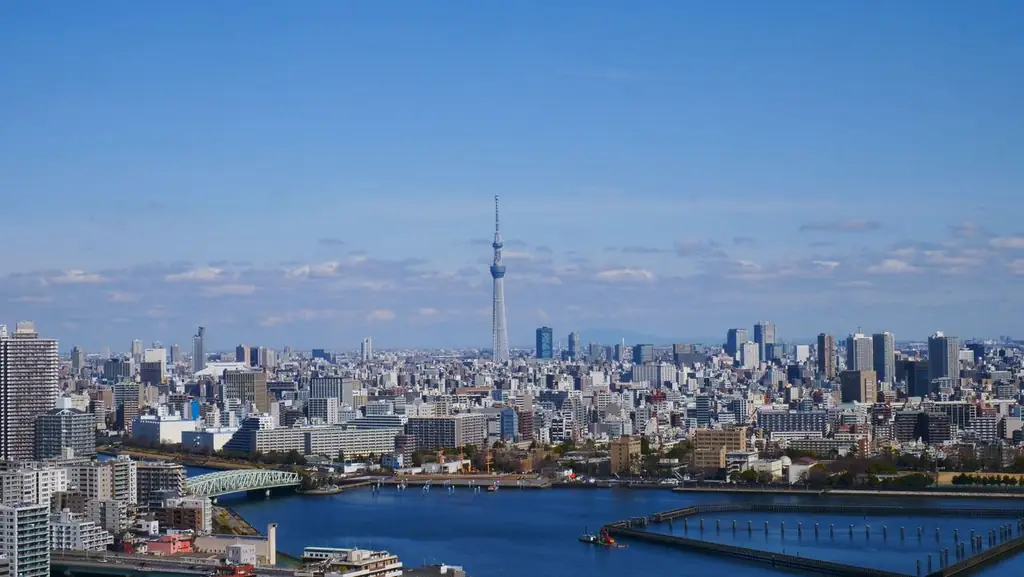
If you would like to extend this into a full day with other sights, our private tours with driver page explains how hourly and daily bookings work, and the Tokyo chauffeur service page covers the city in general. Consider adding the morning at Senso-ji or the view from Tokyo Skytree on a second day.
Crowds, etiquette and security of belongings
Shibuya is a dense and generally safe public space, but a few habits help. Keep to the flow as you cross and avoid stopping in the middle to photograph; the tourism board warns that you may walk into people if you are looking at your camera. Keep bags zipped in the crush, and choose a viewing spot rather than filming from the road.
The deck's rules are strict about loose hats, earphones, tripods and selfie sticks. If you are carrying equipment for professional photography, check the deck's guidance beforehand rather than at the entrance.
Shibuya at night is a poor place for a public figure who wants to go unnoticed. If that is you, ask for a drop-off away from the Hachiko plaza, an alias on the booking and an NDA; the chauffeur will not photograph or post about the evening. Your own security team can walk the route with you, and the chauffeur will agree the pickup corner with them. For the wider region, see our Asia-Pacific directory.
Frequently asked questions
Can a car drive across Shibuya Crossing?
Vehicles do pass through the intersection when the lights allow, but a chauffeur cannot stop on it. All approaches halt at once while pedestrians cross. The practical plan is a drop-off near the station and a short walk.
How far is Shibuya Crossing from Haneda Airport by car?
About 18 km (11 miles), typically 30 to 60 minutes. Most of the route is on the Metropolitan Expressway, so expect longer times in the weekday rush.
How far is Shibuya Crossing from Narita Airport by car?
About 75 km (47 miles), usually 70 to 100 minutes depending on traffic. Many visitors go to the hotel first and visit Shibuya later in the day.
Where is the best place to view Shibuya Crossing from above?
The rooftop of Shibuya Sky, at 229 metres, is the highest public viewpoint. The tourism board also points to the café directly above the crossing, and to the Qfront building, which faces it.
Do I need to book Shibuya Sky in advance?
Online booking is recommended, particularly for sunset. The board says that if online adult tickets sell out, counter tickets are also unavailable, and children's tickets are sold only at the counter on the day.
What time is sunset in Tokyo for planning my slot?
According to the tourism board, sunset ranges from about 16:30 in early December to about 19:00 in late June and early July. It recommends booking about 30 minutes before sunset.
Is there parking at Shibuya Scramble Square?
The building has no parking of its own, but nearby facilities partner with it. A chauffeur drops you and parks nearby, or waits on call.
How long should I allow for Shibuya Crossing and the observation deck?
Allow about 90 minutes for the deck, as the tourism board suggests, plus 20 to 30 minutes for the crossing and Center-Gai. A relaxed visit with a meal takes three hours.
Can I walk from Shibuya to Meiji Jingu?
Yes; it is a walk of roughly 2.5 km (1.5 miles), about 30 to 40 minutes, but many visitors prefer a short car ride between the two with the shrine's forest as the quiet end of the day.