
 United StatesJFK
 MexicoMEX
 BrazilGRU
 ArgentinaEZE
 ChileSCL
 ColombiaBOG
 PeruLIM
 PanamaPTY
 Costa RicaSJO
 Dominican RepublicPUJ
 JamaicaMBJ
 BahamasNAS
 BarbadosBGI
 United KingdomLHR
 IrelandDUB
 FranceCDG
 GermanyFRA
 NetherlandsAMS
 BelgiumBRU
 SwitzerlandZRH
 AustriaVIE
 ItalyFCO
 SpainMAD
 PortugalLIS
 GreeceATH
 TurkeyIST
 DenmarkCPH
 SwedenARN
 NorwayOSL
 FinlandHEL
 PolandWAW
 Czech RepublicPRG
 HungaryBUD
 IcelandKEF
 United Arab EmiratesDXB
 QatarDOH
 Saudi ArabiaRUH
 IsraelTLV
 EgyptCAI
 MoroccoCMN
 South AfricaJNB
 KenyaNBO
 NigeriaLOS
 IndiaDEL
 PakistanLHE
 Sri LankaCMB
 SingaporeSIN
 MalaysiaKUL
 ThailandBKK
 VietnamSGN
 PhilippinesMNL
 IndonesiaCGK
 Hong KongHKG
 ChinaPVG
 TaiwanTPE
 JapanHND
 South KoreaICN
 AustraliaSYD
 New ZealandAKL
Eleven kilometers of stone wall surround the old center of Cartagena, and the first thing a visitor learns is that the wall decides how a car moves around it. Some gates are wide and busy, some lanes inside are one car wide, and on certain streets the authorities restrict vehicles at set hours. A Cartagena Walled City private tour with driver gets around those constraints in the simplest way: the car handles the approach, you handle the walking.
This guide covers the airport run, where a chauffeur can reasonably drop and collect you, what the walls and the castle offer, how heat shapes the day, and which day trips leave from the city. Fares are quoted in the online booker for your exact addresses.
How do you get to the Cartagena Walled City by car?
Rafael Núñez International Airport (CTG) is about 5 km (3 mi) from the Walled City, a drive of 10 to 15 minutes in normal traffic. Hotels in Bocagrande and El Laguito are a little further, around 15 to 20 minutes. A chauffeur meets you at arrivals and drops you at your hotel or the nearest legal stop.
The airport's own website says the historic center is about 10 minutes away and the hotel zone about 15 minutes; the page is on the official airport site. The airport operates around the clock. Colombia's tourism board puts the walls at about a 15-minute drive from the airport on its walls page. Traffic around the Avenida Pedro de Heredia and the causeways to the old town builds from late afternoon. For other airports in the region, see the airports hub.
Where the car actually stops
The Walled City is a compact grid of narrow colonial streets, and cars are guests there. Hotels inside the walls usually have a short drop zone at the door, but some lanes cannot take a full-size SUV. Others sit behind bollards or in zones where traffic is restricted at certain hours.
Cartagena has issued several decrees over the years limiting private vehicles on listed corridors of the Centro Histórico, typically in the afternoon and evening, with exceptions for taxis and special-service cars picking up or dropping off at hotels. The rules have changed more than once, and local press has reported both new restrictions and their withdrawal, so we cannot state what applies on your date. What we can say is how we handle it: tell the desk which hotel or address you need, and the chauffeur confirms the permitted drop-off point. Where a street is closed, the driver stops at the nearest gate and you walk the last block.
Practical points:
- Clock Tower area: the main gate and Plaza de los Coches are busy with pedestrians and carriages. Use a side drop-off.
- Getsemaní: just outside the walls, it is easier to reach, and many guests choose to stay there for exactly that reason.
- Evenings: plan a pickup from a plaza or a hotel doorstep, not from a lane, after sunset.
The walls: what they are and how to use them
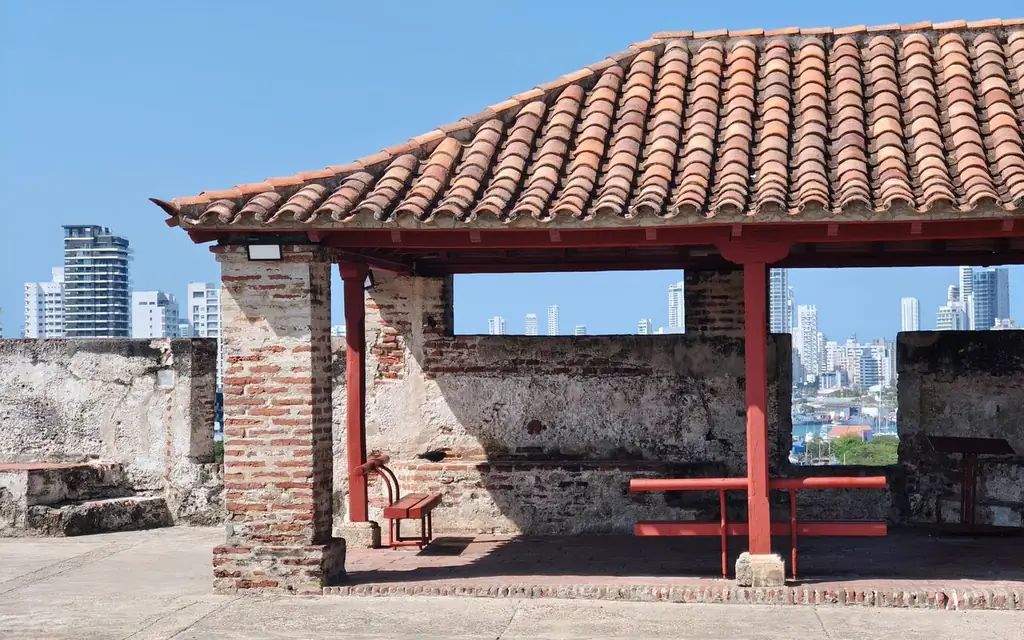
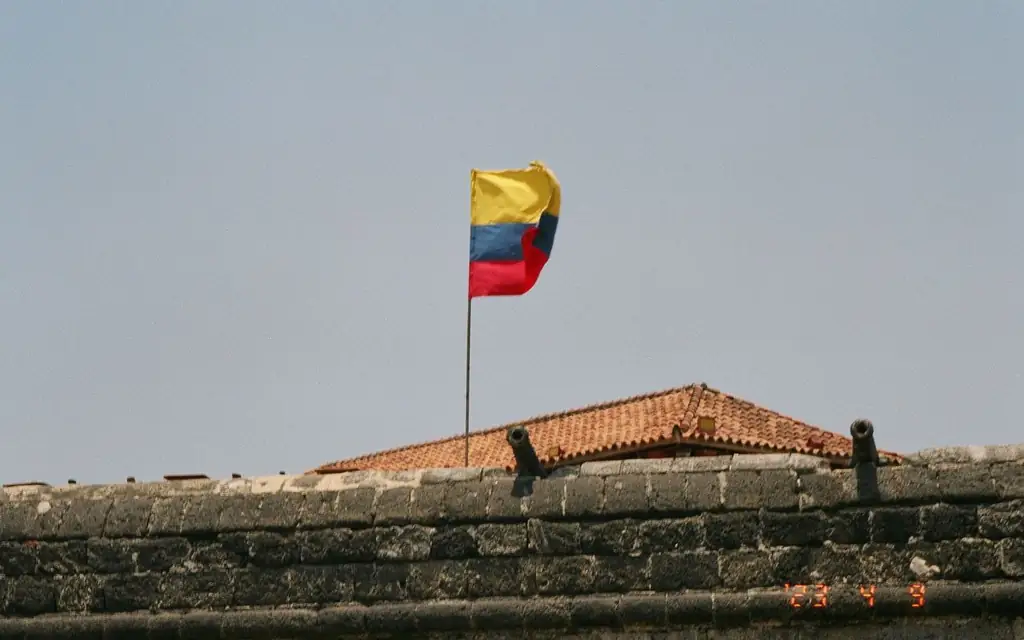
Colombia's tourism board describes the stone walls as eleven kilometers around the historic center and calls them the most complete and best-preserved fortification in South America. Its history page dates the founding of the city to 1533, the start of the wall construction after Francis Drake's attack to 1614, and completion to 1796, almost two centuries later. The ensemble, with the port, fortresses and group of monuments, was inscribed on the UNESCO World Heritage List in 1984.
Visitors do not walk the whole circuit. Instead, they take sections: the bastions near the sea side with sunset views, the stretch near the Clock Tower, and the section above the Santo Domingo bastion. Access to the top of the walls is generally free, and you can step up and down at several points. Wear flat shoes, because the stone is uneven, and carry water; the stone radiates the day's heat in the evening.
Castillo San Felipe de Barajas
The great Spanish fortress sits on the hill of San Lázaro, a short drive from the old town, about 2 km (1.2 mi) away. It is the largest of Cartagena's defenses and, with its tunnels and batteries, one of the most visited sights in the city. Tours are self-guided or led by guides on site.
Opening hours have changed several times in recent years, and the guidance in local press has varied between seasons and years. The fortress is administered by the Escuela Taller Cartagena de Indias (ETCAR), so use its current notice for the opening hours and ticket categories before you go. Colombian residents have had special free-entry days in recent years, but foreign visitors should assume the standard admission applies. The fortress has two large car parking areas, one along Avenida Antonio Arévalo and one on Calle 31, so a chauffeur can wait close by.
Go early. The castle has little shade, the ramps and stairs are steep, and the midday heat is hard on small children.
Churches, museums and the details worth stopping for
Inside the walls, the sights are close together, which is why a car is rarely needed between them. The cathedral, the church and convent of San Pedro Claver, the former Palace of the Inquisition (now a museum) and a string of small plazas lie within a few minutes' walk of one another. Dress for churches in a way that suits the heat: covered shoulders and knees are respectful and widely expected in active places of worship, and hats come off indoors. Museum hours and ticket rules vary by site, so ask your hotel to confirm them and do not rely on a single timetable.
Look up as well as along the street. Wooden balconies, carved doors with heavy knockers, and plaster in faded colors are the details that make the old town a place to wander, not just to photograph. Stop for a fruit juice in the shade rather than pressing on in the middle of the day.
Sensible habits in a busy tourist district
The old town is among the most visited places in Colombia, and like any crowded historic center it has pickpockets, street sellers and offers of tours that sound better than they are. Carry a small bag, keep your phone in a front pocket, agree prices before you accept a service, and use licensed guides and boats. Your chauffeur and our desk are your fixed points: a single confirmation, one invoice, and a number that is answered around the clock. If you are traveling with your own security team, they can accompany you; we are a chauffeur service and not a security company.
Cruise passengers
Cartagena is a regular cruise stop, and ship days put thousands of extra people on the same few streets between about 9:00 and 16:00. If you are visiting from a ship, plan to move before the crowds: a driver collecting you at the pier gate can have you at the walls or the castle while the first tours are still forming. Share the all-aboard time with the desk when booking so the return leg has a margin.
Heat, timing and when to go
Colombia's tourism board gives an average of about 27 °C throughout the year and recommends late November to late April as the drier, fresher season. January is busy because of cultural events, including the Hay Festival and a music festival. The rest of the year is warmer and more humid, with rainy spells, but the walled town works in any season if you shift your day to the morning and evening.
A reliable pattern for a half day:
- Early morning: walls, plazas and the church interiors, before 10:00.
- Midday: a long lunch, a museum, or a hotel pool break.
- Late afternoon: San Felipe or the walls at sunset.
- Evening: dinner in the old town, then a pickup from the plaza.
Getsemaní, Bocagrande and the rest of the city
Beyond the walls, Getsemaní is a neighborhood of colorful murals, cafés and bars that has become a popular base. Bocagrande, a strip of high-rise hotels and beaches on a peninsula, is 15 to 20 minutes from the old town by road. The airport sits in between.
For a fuller picture of the city, the Colombia tourism board's Cartagena page covers beaches, islands and festivals.
Day trips: Rosario Islands, Barú and beyond
Boat trips to the Rosario Islands and Barú leave from the pier area near the old town; the Cartagena tourism corporation is itself based at the Muelle de la Bodeguita. Confirm the exact departure pier with your boat operator. The tourism board lists the Islas del Rosario, Barú, San Bernardo and Tierra Bomba among the main beach areas. A chauffeur can take you to the pier for an early departure and collect you on your return; the boat leg is handled by the operator you choose. Barú can also be reached by road in around an hour.

Barranquilla and Santa Marta are about 2 to 4 hours away by car, according to the tourism board, which makes them feasible for a long day.
Ways to move in and around the Walled City
| Mode | Hotel to walls | Cost note | Fits |
|---|---|---|---|
| Walking | 5 to 25 minutes | Lowest | Hotels inside the walls or in Getsemaní |
| Metered or agreed taxi | 5 to 20 minutes | Agree the fare before you start | Short hops from Bocagrande |
| Horse-drawn carriage | 20 to 40 minutes | Per ride, negotiated | A slow evening loop of the old town |
| Group tour | Half day | Per seat | Solo travelers wanting a guide |
| Chauffeur, fixed fare | 5 to 20 minutes | Fixed fare via the booker | Airport transfers, castle trips, island pier runs, families |
If you are staying inside the walls, walk. It is the lowest cost, the most atmospheric option, and avoids vehicle restrictions. A private car helps with the airport transfer, the castle, the trip to the pier, and the evening when you want a quiet door-to-door ride.
A chauffeured half day
- 08:00 Hotel pickup; drive to the Clock Tower area.
- 08:15 Walk the squares and the walls with a licensed guide, if you have booked one.
- 10:30 Coffee break; return to the vehicle at an agreed gate.
- 11:00 Drive to Castillo San Felipe de Barajas; allow 60 to 90 minutes.
- 12:45 Lunch; return to the hotel or continue to Getsemaní.
A licensed guide is a separate professional; your chauffeur drives, suggests stops and waits, but where the history matters, a guide adds far more. The desk can help you plan pickup points around a guide's schedule.
Linking Cartagena with the rest of Colombia and beyond
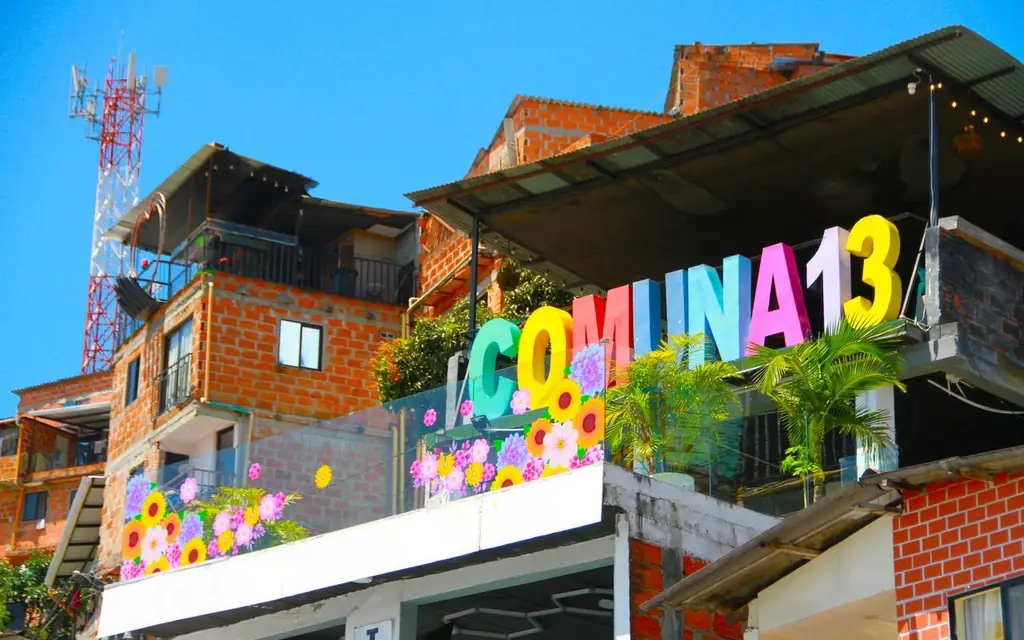
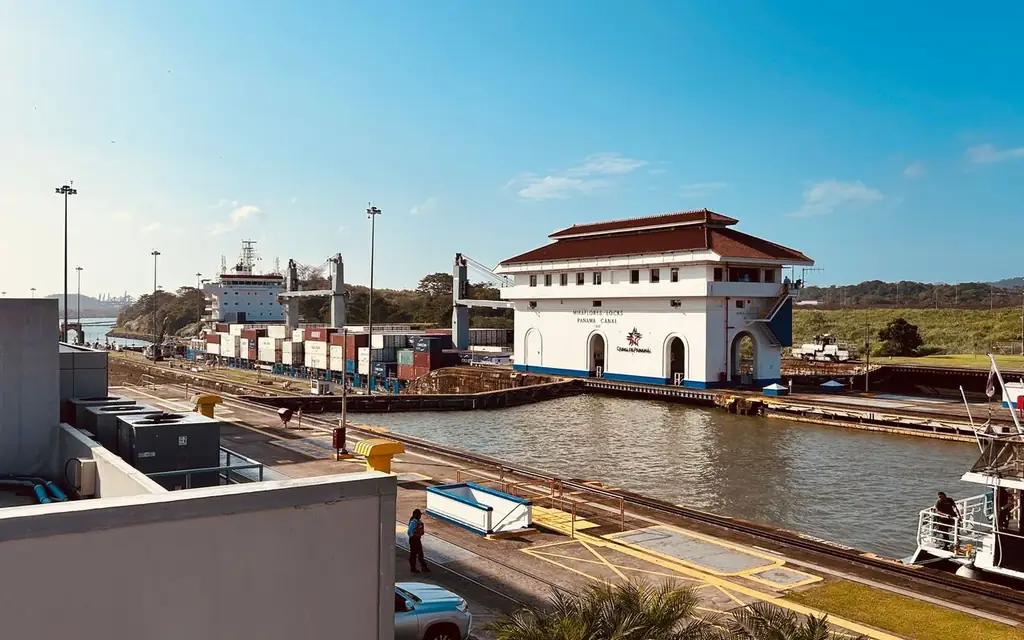
Cartagena is often paired with the Andean city of Medellín, a flight of about an hour. Our guide to Comuna 13 covers that side of Colombia. Farther afield, readers building a longer South American route can look at Lima's historic centre or the engineering of the Panama Canal Miraflores Locks. The Latin America and Caribbean directory lists every guide, and the private tours with a driver page shows how day hire is arranged.
Frequently asked questions
How far is Cartagena's Walled City from the airport?
About 5 km (3 mi), usually 10 to 15 minutes by car. Hotels in Bocagrande and El Laguito are a little further, around 15 to 20 minutes.
Can cars drive inside Cartagena's Walled City?
Yes on many streets, but vehicle restrictions apply on some corridors at certain hours and change by decree. Your chauffeur confirms the permitted drop-off point for your hotel and walks you the last block if needed.
How long are the walls of Cartagena?
About 11 km (7 mi) around the historic center, according to Colombia's tourism board. The ensemble was inscribed on the UNESCO World Heritage List in 1984.
Is Castillo San Felipe de Barajas worth visiting?
Yes, for the scale of the fortress and the view over the city. Go early, wear a hat, and check the ETCAR notice for opening hours and ticket categories before you go.
What is the best time of year to visit Cartagena?
Late November to late April is drier and fresher. January is a festival month. The average temperature is about 27 °C all year.
How do I get to the Rosario Islands?
By boat from the port area near the old town. A chauffeur can take you to the pier and collect you on return; the boat is booked with the operator.
How long do I need for the Walled City and the castle?
Allow a half day for the old town on foot and another 60 to 90 minutes for Castillo San Felipe. A full day lets you add a long lunch, a museum, and the walls at sunset without hurrying. If you also want an island day, plan it for a separate morning, since the boat departures start early and the return leg is slow in the afternoon heat.
Can I book a private driver for Cartagena?
Yes. The online booker returns a fixed fare before you confirm. The airport run, the castle and a pier transfer can sit on one booking, with a licensed local operator delivering each leg.