 United StatesJFK
 MexicoMEX
 BrazilGRU
 ArgentinaEZE
 ChileSCL
 ColombiaBOG
 PeruLIM
 PanamaPTY
 Costa RicaSJO
 Dominican RepublicPUJ
 JamaicaMBJ
 BahamasNAS
 BarbadosBGI
 United KingdomLHR
 IrelandDUB
 FranceCDG
 GermanyFRA
 NetherlandsAMS
 BelgiumBRU
 SwitzerlandZRH
 AustriaVIE
 ItalyFCO
 SpainMAD
 PortugalLIS
 GreeceATH
 TurkeyIST
 DenmarkCPH
 SwedenARN
 NorwayOSL
 FinlandHEL
 PolandWAW
 Czech RepublicPRG
 HungaryBUD
 IcelandKEF
 United Arab EmiratesDXB
 QatarDOH
 Saudi ArabiaRUH
 IsraelTLV
 EgyptCAI
 MoroccoCMN
 South AfricaJNB
 KenyaNBO
 NigeriaLOS
 IndiaDEL
 PakistanLHE
 Sri LankaCMB
 SingaporeSIN
 MalaysiaKUL
 ThailandBKK
 VietnamSGN
 PhilippinesMNL
 IndonesiaCGK
 Hong KongHKG
 ChinaPVG
 TaiwanTPE
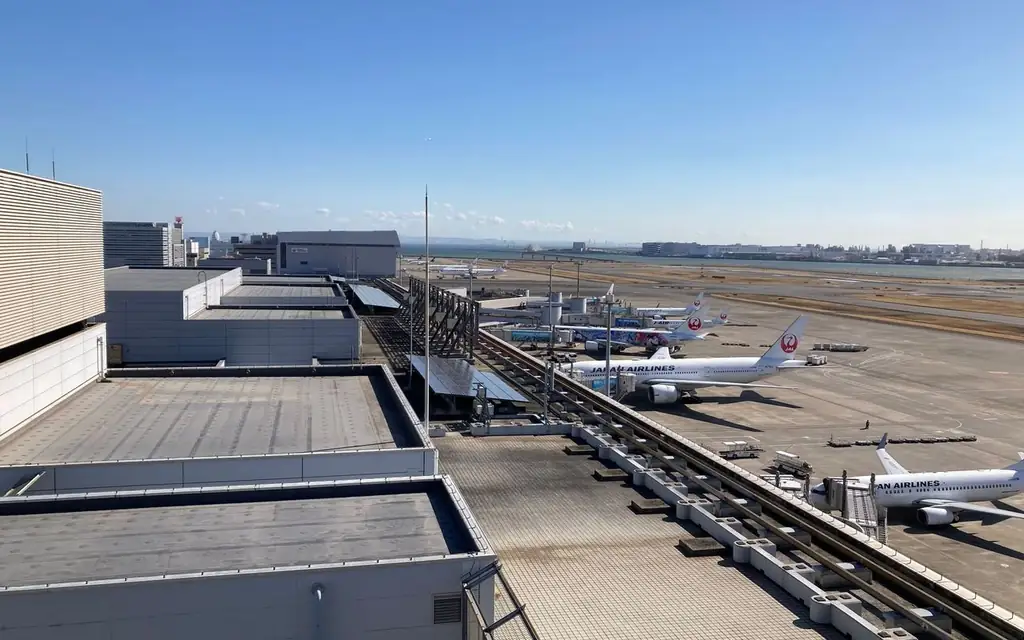
 JapanHND
 South KoreaICN
 AustraliaSYD
 New ZealandAKL
How long is the drive from Tokyo to Nikko Toshogu?
About 140 km (87 miles), usually two to two and a half hours each way from central Tokyo on the Tohoku Expressway and the Nikko-Utsunomiya Road. Nikko Interchange is 2 km from the shrine, and the shrine's own large car park takes about 200 cars.
Those figures come with a seasonal caveat, and it is relevant right now. Mid-October to early November is the foliage season in the Nikko mountains, and the Nikko City Tourism Association warns that the roads fill with visitors. A Nikko Toshogu private tour with driver is a full day: an early start from Tokyo, a measured visit to the shrine, an optional drive up to the lake, and a return that you plan around the traffic.
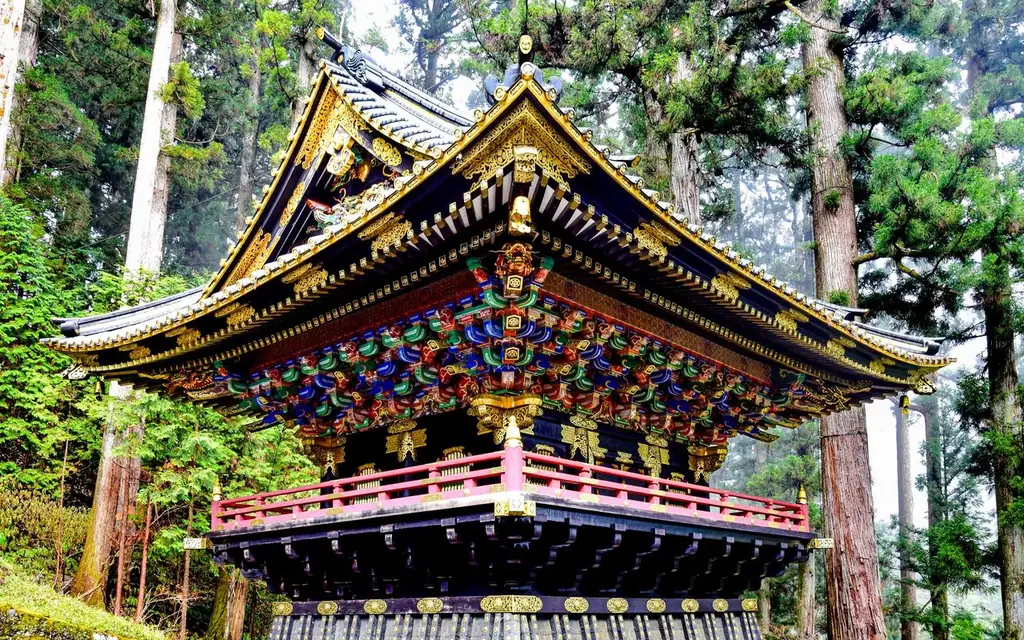
Toshogu is the mausoleum shrine of Tokugawa Ieyasu, the founder of the shogunate that ruled Japan from 1603 to 1867. It is part of a World Heritage listing that Nikko tourism describes as registered in 1999, covering 103 buildings and structures across two Shinto shrines and a Buddhist temple. Its decoration is famous: the tourism board of Tochigi singles out the sleeping cat and the three monkeys of see-no-evil, hear-no-evil and speak-no-evil.
If you are building a longer stay in Japan, our Tokyo chauffeur service page explains how the desk books long-distance and multi-day cars from the capital.
Why Nikko is a day trip, and what it asks of you
The shrine lies in the mountains of Tochigi Prefecture, north of Tokyo. It is a long way for a half-day outing, and a short stay in a hurry means more time on the road than at the shrine. The honest framing is a single dedicated day: leave early, see the shrine, perhaps one more stop, and return with margin.
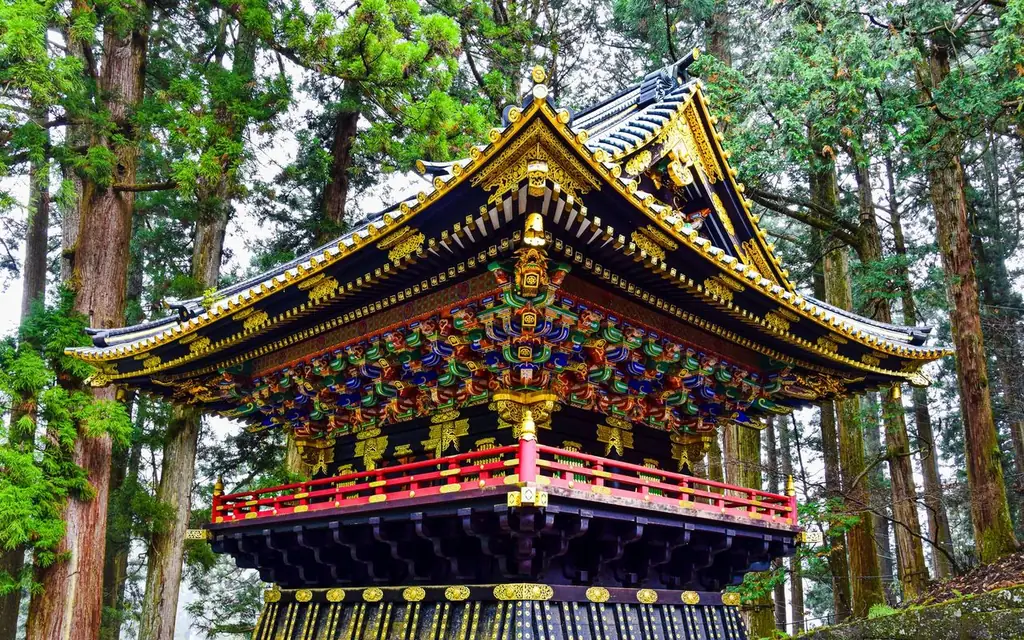
What makes it worthwhile:
- The scale and detail of the buildings, richly coloured and carved, set among tall cedar trees.
- The World Heritage group of three sites, Toshogu, Futarasan-jinja shrine and Rinno-ji temple, together with Shinkyo Bridge, which Nikko tourism lists as part of the area.
- The landscape beyond, in the Okunikko highlands, with Lake Chuzenji and Kegon Falls.
It is also a place for slow walking on a multi-level site. If anyone in your party finds long stairs or uneven paths difficult, contact the shrine before you go and tell the desk, so we can plan the nearest drop-off.
Tokyo to Nikko: the route, the clock and the start time
From central Tokyo the road runs north on the Tohoku Expressway to Utsunomiya Interchange, then follows the Nikko-Utsunomiya Road to Nikko Interchange, which is 2 km from the shrine. That is the route the shrine itself describes on its access page, and it is the one a chauffeur will use.
Distances and times:
- From central Tokyo (Asakusa, Ginza, Marunouchi): about 140 km (87 miles), two to two and a half hours with normal traffic.
- From Haneda (HND): about 160 to 170 km (100 to 105 miles), usually two and a half to three hours. See the Haneda chauffeur service page; a morning arrival and an afternoon Nikko transfer is a long day, so most visitors drive up the next day.
- From Narita (NRT): about 170 to 190 km (105 to 118 miles) depending on the route, three to three and a half hours.
Weekends, public holidays and the foliage weeks lengthen all of these. Leave central Tokyo by 6:30 to 7:00 on a weekend and you reach Nikko before the heaviest arrivals. Leave at 9:30 on a peak Saturday and you may spend as long on the last stretch as on the first 100 km.
Flight tracking is included on every airport pickup, and international arrivals have 60 minutes of free waiting after landing; for a Nikko day starting from the airport, tell the desk so the schedule starts from the real landing time.
Where the car goes: the Toshogu parking rules
The shrine's access page is unusually specific. As of 2026, the Toshogu Large Parking Lot is open year-round and takes about 200 passenger cars, with no reservation needed. The fee is 600 yen per visit, paid on exit with coins or a note. Microbuses and large buses have limited spaces, require a reservation at least seven days ahead, and are charged at a higher rate. The page also states that buses are not allowed on Saturdays, Sundays, public holidays or days with special events.
What that means for a chauffeured group:
- Sedans and Luxury SUVs: use the large lot without a booking. On a busy weekend morning in the foliage season it can fill, so arrive early.
- Executive Sprinter or mini-coach: reserve ahead, and note that bus and large-vehicle parking is not available on weekends and public holidays; weekday travel is far simpler.
- Any vehicle: the chauffeur drops you at or near the shrine entrance if the traffic rules allow, then parks.
The shrine's address is 2301 Yamauchi, Nikko City, Tochigi. Check the Japanese-language access and parking page for the current text, or ask the desk to confirm anything that has changed.
Hours, tickets and the audio guide
The shrine's official page lists admission hours of 9:00 to 17:00 from April 1 to October 31, and 9:00 to 16:00 from November 1 to March 31, with reception closing 30 minutes before the closing time. That means a last entry at 16:30 in the summer schedule and 15:30 in the winter schedule. The page does not state closing days.

As of 2026 the official table lists four ticket types: shrine only, a set that adds the Treasure House, the Treasure House alone and the Art Museum alone. The shrine-only adult ticket is 1,600 yen and the child ticket 550 yen; the set is higher. An audio guide is 500 yen per day, available in Japanese, English and Chinese. The full table is on the official admission page, and the Tochigi prefecture tourism pages give the same hours and the adult price.
We do not sell tickets; you pay at the shrine. Allow two to three hours on site, more if you add the other World Heritage buildings.
Autumn on the Irohazaka: the road beyond the shrine
Many visitors extend the day to Lake Chuzenji and Kegon Falls in Okunikko, the highlands at the heart of Nikko National Park. The way up is the Irohazaka, a mountain road that Nikko tourism describes as having 48 sharp curves, and that it names among the best places to see the autumn colors, from mid-October to early November. The same page warns of traffic congestion during the season.
Two practical notes. First, local sources describe the road as two one-way carriageways, the older route for the descent and the newer for the climb, so there is no stopping to turn back. Second, anecdotal reports from peak weekends describe queues of an hour or more on the descent in the late morning, so a plan to go up early and come down before the afternoon rush is far better than a plan to come down at noon.
The Nikko City Tourism Association also notes that the Akechidaira stop at the foot of the climb is about 35 minutes by bus from the Nikko stations; a car is quicker on a quiet day and no faster on a peak one. Read the association's Irohazaka page before choosing.
For a day that stays within the central Nikko area and avoids the highlands, the shrine, Rinno-ji and Shinkyo Bridge fill five to six hours without the mountain road. Tell the desk which version you prefer, and the chauffeur will build the timetable.
One day or two: the case for staying overnight
A same-day return from Tokyo gives you about six hours in Nikko with a 6:30 start and a 16:00 departure, which is enough for Toshogu, lunch and one more site. If you want the highlands as well, or prefer not to spend four to five hours in the car on the same day, an overnight in the Nikko area changes the equation. You arrive after the morning rush, see the shrine in the afternoon light when day trippers are leaving, spend the evening in a local inn, and drive up to the lake before the crowds the next morning.
The Tochigi prefecture tourism pages for the shrine, which give the same hours and adult price as the shrine itself, describe Toshogu as enshrining Ieyasu Tokugawa and note that most of the complex was rebuilt in the 17th century. You can read them on the Visit Tochigi page. For a chauffeured stay, the car can remain with you for both days or collect you on the second morning, whichever suits your plan; tell the desk at booking and the fare for each version is shown before you confirm.
A few packing notes for the overnight option: the mountains are cooler than Tokyo at any time of year, late-autumn mornings at the lake can be cold, and rain is common. A change of shoes, a light waterproof layer and a charged phone for the return journey will serve you better than a large suitcase in the vehicle.
A sample day: out at dawn, back by evening
- 6:30, depart central Tokyo. Take the expressway north; breakfast at a service area if you like.
- 9:00, Toshogu opens. Park in the large lot and walk in. Allow two to three hours.
- 12:30, lunch in central Nikko, then Rinno-ji, Futarasan-jinja or Shinkyo Bridge.
- 14:00, optional highlands. In peak foliage season, go only if the traffic report is good; otherwise, stay in the town.
- 15:30 to 16:00, depart for Tokyo. Arrive between 18:00 and 19:30.
Combine this with a first day in Tokyo that begins at Senso-ji, which sits at the other end of the Tobu railway line to Nikko. A second excursion on the opposite side of the capital is covered in our guide to Mount Fuji and Hakone.
Nikko compared: how to get there
| Way to travel | Time from central Tokyo | Cost note | Fits |
|---|---|---|---|
| Tobu railway, Asakusa to Tobu-Nikko (limited express) | About 1 hour 50 minutes, plus local transfer | Lowest | Travelers who prefer a train and can use the local bus |
| Tobu railway, express service | About 2 hours 5 minutes | Lowest | Flexible travelers who prefer rail |
| JR via Utsunomiya | Longer, with a change | Lowest | Rail-pass holders |
| Private chauffeur car | 2 to 2.5 hours each way, longer in the foliage weeks | Fixed fare, quoted before you book | Families, small groups, anyone wanting Toshogu plus Chuzenji in one day |
| Tour coach | Fixed program | Per-seat fare | Solo travelers who want a set itinerary |
The two Tobu times come from the shrine's access page. The comparison is fair: the train is the lowest-cost and fastest way to Nikko on a weekend peak, since it avoids the expressway and the Irohazaka. The car wins when you have a group, luggage, a child seat, mobility needs, or when you want to add the lake without waiting for buses.
Etiquette, dress and discretion
Toshogu is an active religious site and a World Heritage property. Keep voices low, follow the signs about photography, and be careful at stairs and on stone paths, which can be slippery in rain. In the cooler months the mountains are noticeably colder than Tokyo; bring a layer.
On a long day with young children, the right seats matter more than usual; name them at booking. A guest travelling under an alias is welcome, and the chauffeur will not post about the trip. Security is outside our service, so if your own team accompanies you, the chauffeur agrees the shrine drop-off with them in advance.
For other itineraries across the region, browse the Asia-Pacific directory and the private tours with driver page.
Frequently asked questions
How far is Nikko Toshogu from Tokyo by car?
About 140 km (87 miles) from central Tokyo, around two to two and a half hours each way in normal traffic.
Is there parking at Nikko Toshogu?
Yes. The Toshogu Large Parking Lot takes about 200 cars without a reservation, at a per-visit fee. Microbuses and large buses must reserve at least seven days ahead and are not allowed on weekends, public holidays or special-event days.
What are the opening hours of Toshogu?
9:00 to 17:00 from April 1 to October 31, and 9:00 to 16:00 from November 1 to March 31. Reception closes 30 minutes before closing.
How much does it cost to enter?
As of 2026 the official page lists 1,600 yen for an adult shrine-only ticket and 550 yen for a child. Combination tickets cost more.
When are the autumn colors in Nikko?
Nikko tourism recommends mid-October to early November for the Irohazaka. Expect heavy traffic in that period.
Can I visit Nikko from Haneda Airport in one day?
It is possible but long, at about 160 to 170 km (100 to 105 miles) each way. Most visitors sleep in Tokyo first and drive up the next morning.
Can I do Nikko and Lake Chuzenji in one day?
Yes, outside peak weekends. In the foliage season, go early and come down before the afternoon queue on the Irohazaka.
Is the train better than a car?
The Tobu line from Asakusa takes about 1 hour 50 minutes to Tobu-Nikko by limited express. It costs less and avoids road traffic; a car is better for groups and for adding the highlands.
How long should I spend at the shrine?
Allow two to three hours for Toshogu, longer if you add the other World Heritage buildings.