 United StatesJFK
 MexicoMEX
 BrazilGRU
 ArgentinaEZE
 ChileSCL
 ColombiaBOG
 PeruLIM
 PanamaPTY
 Costa RicaSJO
 Dominican RepublicPUJ
 JamaicaMBJ
 BahamasNAS
 BarbadosBGI
 United KingdomLHR
 IrelandDUB
 FranceCDG
 GermanyFRA
 NetherlandsAMS
 BelgiumBRU
 SwitzerlandZRH
 AustriaVIE
 ItalyFCO
 SpainMAD
 PortugalLIS
 GreeceATH
 TurkeyIST
 DenmarkCPH
 SwedenARN
 NorwayOSL
 FinlandHEL
 PolandWAW
 Czech RepublicPRG
 HungaryBUD
 IcelandKEF
 United Arab EmiratesDXB
 QatarDOH
 Saudi ArabiaRUH
 IsraelTLV
 EgyptCAI
 MoroccoCMN
 South AfricaJNB
 KenyaNBO
 NigeriaLOS
 IndiaDEL
 PakistanLHE
 Sri LankaCMB
 SingaporeSIN
 MalaysiaKUL
 ThailandBKK
 VietnamSGN
 PhilippinesMNL
 IndonesiaCGK
 Hong KongHKG
 ChinaPVG
 TaiwanTPE
 JapanHND
 South KoreaICN
 AustraliaSYD
 New ZealandAKL
Victoria Falls sits on a border, and the border is the first decision of the trip. The same waterfall can be seen from Zimbabwe, from Zambia or from the air, and each choice changes the road, the paperwork and the view. Most of the logistics a chauffeur handles here are not about the falls at all; they are about getting the right people to the right side with the right documents, at the right hour.
This guide is for travelers searching for a Victoria Falls private tour with driver or asking how to get to Victoria Falls by car. It covers the two sides, the airports, entry fees reported for 2026, the water-level seasons that decide what you will see, and a one-day and two-day plan. It connects to our guides on Kruger National Park and the Giraffe Centre in Nairobi, both common companions on a southern and eastern Africa itinerary.
Which side of Victoria Falls should you visit, and how do you get there?
Most first-time visitors choose the Zimbabwe side, which has the longest, most continuous views of the falls. Victoria Falls Airport is about 20 km (12 miles) from the town, a drive of 20 to 30 minutes, and the town sits within walking distance of the park gate. The Zambia side is reached through Livingstone.
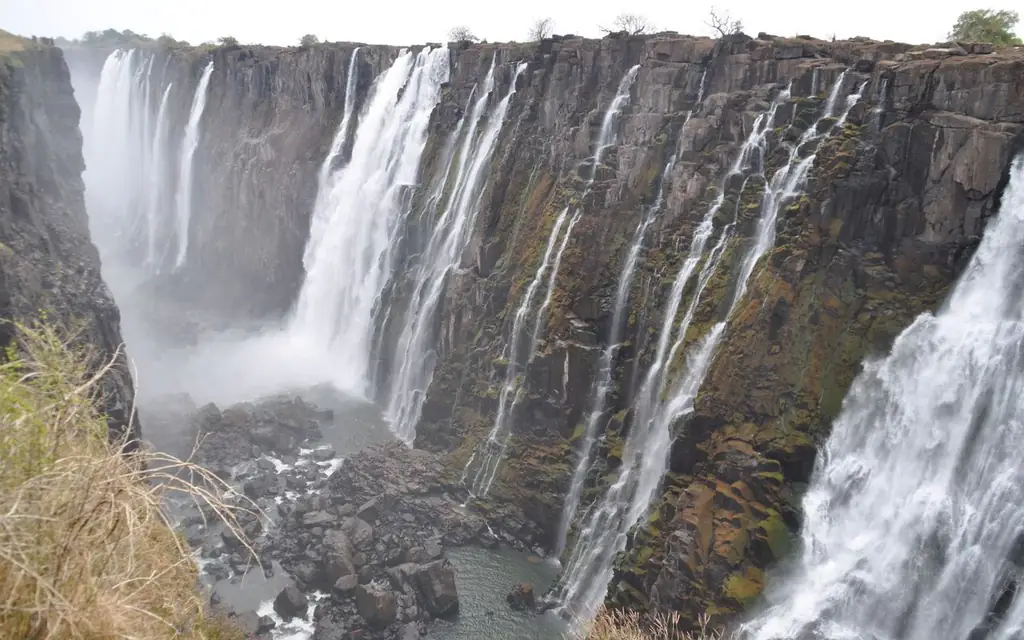
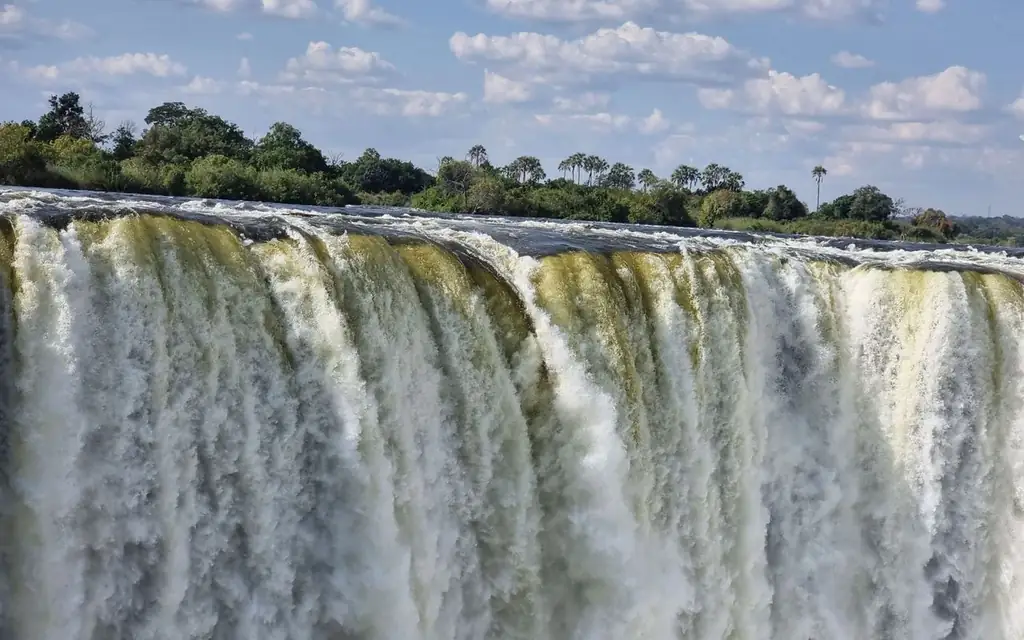
The falls are a transboundary World Heritage property, listed by UNESCO as Mosi-oa-Tunya / Victoria Falls. UNESCO describes the Zambezi as more than 2 km wide at this point, plunging down a series of basalt gorges and raising a mist visible from more than 20 km away. The property covers 6,860 hectares across the Mosi-oa-Tunya National Park in Zambia and the Victoria Falls National Park and a riverine strip of the Zambezi National Park in Zimbabwe. The waterfall is about 1,708 meters wide, and UNESCO gives heights of 61 meters at Devil's Cataract, 83 meters at the Main Falls, 99 meters at Rainbow Falls and 98 meters at the Eastern Cataract.
Those numbers explain the practical difference. The Zimbabwe side faces the full width of the falls across a gorge, so the views are broad. The Zambia side takes you closer to the lip of the falls in some places and onto Livingstone Island in the right season.
The airports and the road to town
Victoria Falls Airport serves the Zimbabwe side. Distances quoted to the town vary between about 18 and 22 km (11 to 14 miles) depending on the reference point, and a drive of 20 to 30 minutes is a safe planning figure. The road is a single main route, so there is little route choice; the chauffeur's value is in meeting you, handling luggage and dropping you at the right hotel or lodge, many of which sit on the edge of the Zambezi National Park.
On the Zambia side, Livingstone's airport is on the edge of the town, and the drive to the falls takes well under an hour. Which airport you use depends on where you sleep. The rule that matters is to fly into the side where you will spend most of your nights. If you fly into one and sleep on the other, plan for a border crossing with luggage.
Our standard airport service applies: flight tracking on every pickup, 60 minutes of free waiting after an international landing, and an optional name-board meet-and-greet inside arrivals. Many travelers to Victoria Falls connect through Johannesburg; the Johannesburg chauffeur service page covers that gateway, and the airports hub lists others we serve.
Entry fees, gates and what to bring
Entry to the Zimbabwe side is paid at the rainforest gates. Zambia Tourism reported in February 2026 that the Zimbabwe Parks and Wildlife Management Authority had raised international day-visitor fees to US$58 at the main gate, US$174 at the VIP gate and US$116 for moonlight viewing, with the rates to apply until further notice and not applying to the Zambian side. Treat those figures as indicative and confirm them with ZimParks before you travel, because tariffs can change without much warning.
Pay-at-the-gate systems can break, so carry some US dollar cash as a backup alongside a card. A raincoat is useful at any time of year, and in high water it is essential: the spray soaks visitors on the main path. Waterproof bags protect phones and cameras. Wear shoes with grip, because the rainforest paths are wet and slippery. A hat and sunscreen are needed once you leave the spray zone.
A chauffeur is not a licensed guide. The park has its own guides, and the town has a long-established guiding community. If you want the geology, the history of the bridge or the birdlife of the gorges explained, ask your lodge to arrange a licensed guide for the walk.
Walking the Zimbabwe side, viewpoint by viewpoint
UNESCO's figures give a useful map of what you will see. The path follows the gorge opposite the falls, so each viewpoint shows a different section of the same curtain. Devil's Cataract, at the western end, drops 61 meters and is the place to feel the force of the river as it enters the gorge. The Main Falls, at 83 meters, are the central mass of water. Rainbow Falls, at 99 meters, are the highest section and the one that throws the most spray, which is why the rainforest walk here is the wettest. The Eastern Cataract, at 98 meters, closes the sequence toward the Zambian side.
Plan two to three hours for the full path, longer if you stop to photograph. In high water you may see little from the central viewpoints because of the mist, and the best photographs are often taken from the first and last points, or from the air. In low water the walk is drier and the rock faces are visible. Visitors who prefer a shorter outing can choose two or three viewpoints and leave the rest; the chauffeur waits at the nearest gate.
Moonlight viewing, listed among the fees reported for 2026, is a separate ticket and a separate experience, and it only runs around the full moon. Ask your lodge whether it is available on your dates, and plan the return transfer with the desk, since the town is dark and quiet at night.
Health, money and small practicalities
The Victoria Falls region is a tropical area, and your travel doctor can advise on malaria prevention and other health precautions for your dates. Insect repellent, sun protection and drinking water are basic items. Carry small US dollar notes for tips and gate payments, and keep a card as a backup. Mobile coverage is good in town and weak on the river and in the national parks.
Respect the wildlife around town. Elephants, baboons and warthogs wander through the area, and hippos and crocodiles live in the river; keep your distance and follow lodge instructions. Walking alone at dusk away from lit areas is not advised. Our drivers are experienced professionals but they are not a security service, and guests with their own security team can coordinate arrival points with the desk.
Seasons: high water, low water and what changes
The water level is the single largest influence on the visit. Operators commonly describe a high-water period from about March to May, with the flow at its peak around April, when UNESCO's figure of up to 500 million liters per minute is in the right range. The spray is so dense that views from the ground can disappear, and many visitors in that period take a helicopter flight to see the falls from above. In the low-water months, roughly September to December, the flow is much reduced, the cliff faces are visible and the Zambia side is nearly dry in places.
For that reason, the Zimbabwe side is the safer choice for a single visit at any time of year, because the Main Falls and Devil's Cataract flow year-round. Livingstone Island and Devil's Pool on the Zambia side are seasonal and generally open only when the water is low. Check with the operator before you plan around them. If your trip falls in the dry season, game viewing nearby is better, since animals gather at permanent water; that is the same dry-season logic that applies at Kruger.
Neither extreme is the wrong time. High water is the most dramatic; low water is the most adventurous. A shoulder month such as June or July offers good flow and clearer views.
Crossing the border: bridge, visas and day trips
The Victoria Falls Bridge links the two countries over the Zambezi gorge. Day trips between Livingstone and the Zimbabwe side are common, and tours often combine a transfer across the border with entry to the falls. What each traveler needs depends on nationality, and the rules change.
The KAZA UniVisa is a single tourist visa for Zambia and Zimbabwe that has been described as allowing multiple visits to both countries for up to 30 days, with limited Botswana day trips; its coverage has been discussed for expansion, so verify the current position. Whether you need it, a single-entry visa, a day-tripper arrangement or nothing at all for a short crossing depends on your passport. Check with the immigration authorities of both countries before you travel, and tell our desk at booking if you plan to cross, so the day is built around the border rules for your passport.
Because cross-border trips follow local cabotage rules, the vehicle and driver may change at the border. The desk arranges the handover with the local operators. Allow time at the border posts, and carry passports, visas and any printed confirmations.
Comparing the ways to get around
| Option | Typical time | Cost note | Who it suits |
|---|---|---|---|
| Walking from town to the park gate | About 10 to 20 minutes | Free | Guests staying in town |
| Hotel or lodge shuttle | 5 to 30 minutes | Often free or low | Guests of larger lodges |
| Local taxi | 5 to 10 minutes in town | Metered or agreed | Short hops, daytime only |
| Rideshare | Limited availability | Not dependable | Rarely a good option here |
| Shared transfer or day tour | Fixed schedule | Per-seat price | Solo travelers, light baggage |
| Private chauffeur | 20 to 30 minutes from the airport | Fixed fare via the booker | Arrivals, groups, cross-border day plans |
The town of Victoria Falls is compact, and many visitors walk to the park gate from a central hotel. Walking is the lower-cost choice and a good one. The chauffeur earns its place on the airport transfer, on a trip to a lodge outside town, on a cross-border day with luggage, and on an evening return from a sunset cruise on the Zambezi. Tell the desk if the group needs a larger vehicle.
One day, two days
One day on the Zimbabwe side. Collect at the airport or your lodge, and walk the falls early, before the heat and the tour groups. Take the Devil's Cataract, Main Falls and Rainbow Falls viewpoints in sequence, and allow two to three hours. Lunch in town, then an afternoon activity of your choice; a sunset cruise on the river is the traditional ending. The chauffeur meets you at the dock.
Two days with Zambia. On the first day, do the Zimbabwe side as above. On the second, cross to Livingstone, visit the Zambian park and, if the season allows, Livingstone Island. Return across the bridge in the late afternoon, leaving margin for the border.
Beyond the falls. Chobe National Park in Botswana lies across another border at Kasane, about 70 to 80 km (45 to 50 miles) from the falls, and works as a day trip; border rules apply, so ask the desk early. For a longer southern African route, pair the falls with Kruger, the Apartheid Museum in Johannesburg, or the Cape Peninsula and Table Mountain. Our private tours with driver and Africa directory pages show how these fit together.
Accessibility and respect for the river
The main footpath is mostly level but wet, and uneven in places; the Zimbabwe side offers a series of viewpoints at various distances from the entrance. Tell the desk at booking if anyone has limited mobility so the chauffeur can drop you at the nearest gate and plan shorter viewpoints. Child, toddler and booster seats are available on request. Stay behind the barriers, keep to marked paths and watch children near edges.
Mist can make surfaces slippery; take care on steps. In the dry season, the sun is strong and the walk is exposed, so water and a hat are sensible.
Frequently asked questions
Which side of Victoria Falls is better?
The Zimbabwe side gives the broadest and most continuous views and flows all year. The Zambia side is closer to the lip of the falls in places and has seasonal activities such as Livingstone Island and Devil's Pool. Many visitors see both.
How far is Victoria Falls Airport from the falls?
About 20 km (12 miles) to the town, normally 20 to 30 minutes by car. The park gate is a short distance from the town center.
What is the best time to visit?
High water is roughly March to May, with the heaviest spray. Low water is roughly September to December, with clearer views and seasonal adventure activities on the Zambia side. Operators differ on exact months.
What are the entry fees?
Zambia Tourism reported in February 2026 an international day fee of US$58 at the main rainforest gate on the Zimbabwe side. Confirm with ZimParks before you travel.
Can I visit both sides in one day?
Yes, many travelers do, using the bridge border. It needs the right visas and time at the border posts, so tell the desk at booking.
Do I need a visa?
It depends on your passport. The KAZA UniVisa covers Zambia and Zimbabwe for eligible nationalities. Check with immigration before traveling.
Can a chauffeur take me across the border?
Cross-border trips follow local cabotage rules, so the vehicle and driver may change at the border. The desk arranges this.
Can tourist offices arrange this for visitors?
Official tourist offices and visitor centers can book chauffeur services for their visitors with LimousineWorldwideDirectory.com through a trade account.