
 United StatesJFK
 MexicoMEX
 BrazilGRU
 ArgentinaEZE
 ChileSCL
 ColombiaBOG
 PeruLIM
 PanamaPTY
 Costa RicaSJO
 Dominican RepublicPUJ
 JamaicaMBJ
 BahamasNAS
 BarbadosBGI
 United KingdomLHR
 IrelandDUB
 FranceCDG
 GermanyFRA
 NetherlandsAMS
 BelgiumBRU
 SwitzerlandZRH
 AustriaVIE
 ItalyFCO
 SpainMAD
 PortugalLIS
 GreeceATH
 TurkeyIST
 DenmarkCPH
 SwedenARN
 NorwayOSL
 FinlandHEL
 PolandWAW
 Czech RepublicPRG
 HungaryBUD
 IcelandKEF
 United Arab EmiratesDXB
 QatarDOH
 Saudi ArabiaRUH
 IsraelTLV
 EgyptCAI
 MoroccoCMN
 South AfricaJNB
 KenyaNBO
 NigeriaLOS
 IndiaDEL
 PakistanLHE
 Sri LankaCMB
 SingaporeSIN
 MalaysiaKUL
 ThailandBKK
 VietnamSGN
 PhilippinesMNL
 IndonesiaCGK
 Hong KongHKG
 ChinaPVG
 TaiwanTPE
 JapanHND
 South KoreaICN
 AustraliaSYD
 New ZealandAKL
What does a car actually do at Fushimi Inari Taisha?
It takes you from Kyoto Station or your hotel to the shrine's edge in 15 to 30 minutes, and waits. The shrine's own car parks are limited and reserved for shrine visitors, so a chauffeur typically drops you near the main approach and parks nearby or stays on call.
Fushimi Inari Taisha is a hillside shrine on the south-eastern edge of Kyoto, known for the tunnels of vermilion torii gates that climb Mount Inari. The mountain is 233 meters high, according to the shrine's English site, and the paths are part of the shrine precinct, so a visit is a walk uphill rather than a stop in a courtyard. A Fushimi Inari Taisha private tour with driver is therefore a transfer plus a plan: a smooth arrival, a clear idea of how far you intend to climb, and a car at the bottom when you come down.
Kyoto is a city where the car is not always faster than the train, and this shrine sits on a railway line. We will say so plainly below. Where a chauffeur earns the booking is in the combination: an airport transfer, luggage, a family, or a day that links Fushimi Inari with other sites that the train handles poorly. Browse our Asia-Pacific directory for the wider region.
The shrine in a paragraph
The shrine's English pages give the address as 68 Fukakusa Yabunouchi-cho, Fushimi-ku, Kyoto. The Kyoto city tourism site describes the district's sake heritage, and an older entry there describes the shrine as dedicated to the god of rice and sake and ascribes its founding to the Hata clan in the eighth century; the Fushimi district around it is one of Japan's prominent sake-brewing areas, with over 20 breweries. The shrine holds traditional festivals through the year, many tied to the seasons, and these draw large crowds.
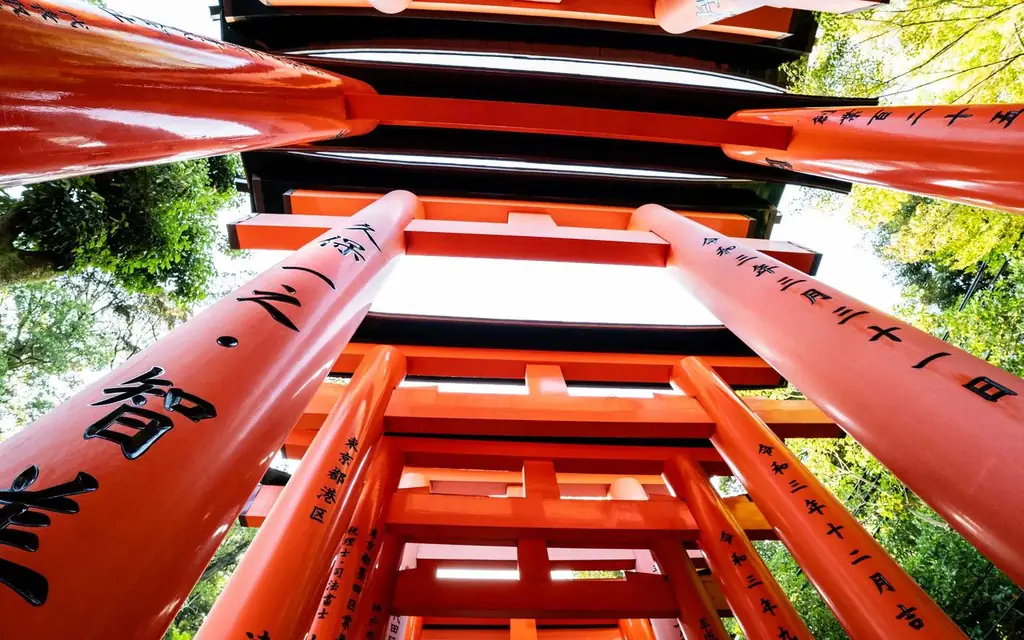
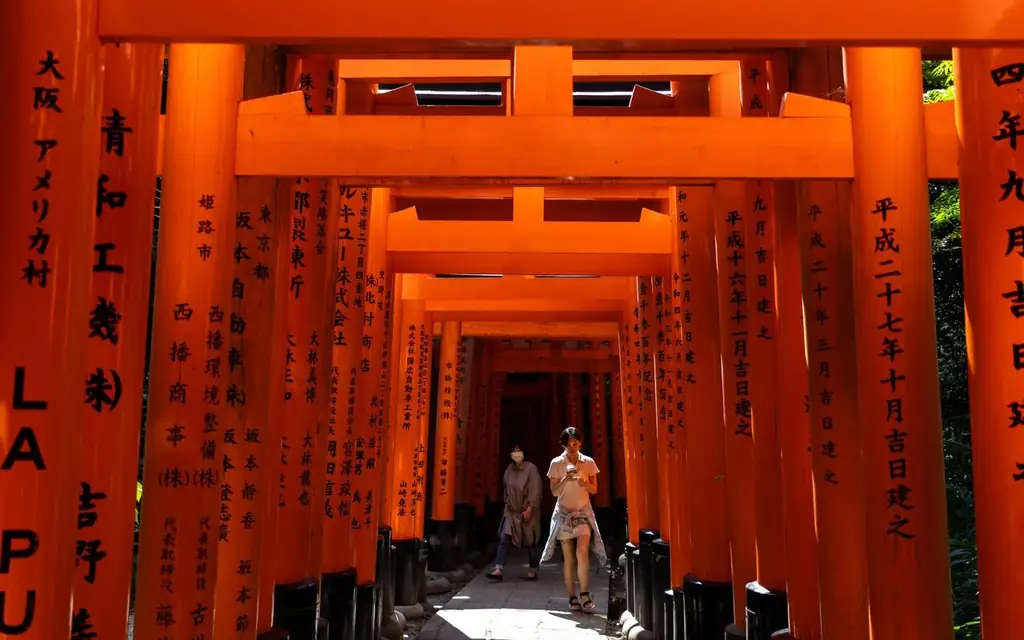
What visitors come for is the path of torii gates that begins behind the main hall and climbs the mountain, with side paths, small shrines and rest stops along the way. The first section is the busiest. Beyond it, the crowds thin quickly, and the further you climb the more the walk becomes a forest hike with stone steps.
Entry to the grounds is free. There are no tickets, no timed entry and no reservation system for the shrine itself, which is both its appeal and the reason for its crowds.
Reaching the shrine from Kyoto, Kansai and Itami airports
Kyoto does not have its own airport, so international visitors arrive through Osaka's airports or by the Shinkansen. Our airports hub lists the airport pages we have written; for the Kansai region the pickup runs through the local operator in the directory, and the desk confirms terminal and meeting point at booking.
- From Kyoto Station: about 5 km (3 miles), 15 to 30 minutes by car, longer in the late afternoon and during seasonal peaks. The Kyoto city tourism site warns that road journeys in Kyoto can take more than twice as long as expected because of traffic and congestion.
- From Kansai International (KIX): about 90 to 95 km (56 to 59 miles), usually 1 hour 15 minutes to 2 hours.
- From Itami (ITM): about 50 km (31 miles), usually 50 to 80 minutes.
- From central Osaka (Umeda or Namba): about 45 km (28 miles), 50 to 80 minutes.
For airport arrivals, every pickup includes flight tracking, and on international arrivals you have 60 minutes of free waiting after landing. A name-board meet-and-greet in the arrivals hall can be added, and an alias can appear on the board.
Parking and drop-off: what the shrine says
The shrine's access page is direct. By car, it is about 20 minutes from the Kyoto Minami Interchange on the Meishin Expressway, and about 10 minutes from the Kamitoba exit of the Hanshin Expressway. It says parking is limited, that its lots are for shrine visitors only, and that staff will direct you to other parking if its lots are full. The page recommends public transport.
For a chauffeured arrival:
- The car approaches the shrine from the expressway side and stops as close to the main approach as traffic allows.
- You get out and walk to the main torii and the hall; the chauffeur parks nearby or waits.
- When you come down from the mountain, message the chauffeur, who will meet you near the same point. The path ends where it began, so there is no need for a second pickup location.
On busy days the roads around the shrine and the narrow approach streets are congested with pedestrians and taxis. Ask the desk to schedule a drop-off earlier than the crowd, rather than at the midday peak.
Read the shrine's access page and its main English site before you go.
Three ways to walk it: 30 minutes, 90 minutes, or the full mountain
The shrine does not publish a set route, so these are planning estimates from common experience, and the mountain's own paths are the reference.

- The short walk, about 30 to 45 minutes. The main hall, the first dense section of torii and a short climb for the photographs. Good for travelers with limited time or mobility.
- The halfway walk, about 90 minutes to two hours. Continue up to the major junction partway up the mountain, where there is a viewpoint over the city, then return. Most visitors who walk a lot choose this.
- The summit loop, about two to three hours. The full circuit to the top and back. Wear shoes with grip and carry water; there are many steps, and the later sections are quiet and shaded.
Whichever you choose, tell the chauffeur the likely time, so the car is positioned appropriately. A good rule is to add 20 minutes to your own estimate, because the stairs are slower going down than people expect, and photography stops add up.
Rules and courtesies from the shrine itself
The shrine publishes a request to all visitors. It prohibits smoking and open flames, entering restricted areas such as the main hall interior or areas behind the fences, damaging buildings, torii or trees, placing items on lanterns, flying drones, commercial photography and photography in prohibited areas, and photographing or filming on narrow paths in a way that blocks other visitors. Eating and drinking are to be done in designated rest areas, not while walking. Pets are not allowed except guide dogs and other necessary animals, and wedding dresses or other costumes unsuitable for worship may not be worn in the grounds. Do not park in the shrine lots unless you are visiting.
The practical message: walk to one side on the narrow paths, step out of the flow to take photographs, and keep your voice low. You can read the shrine's request to visitors before you go. If you plan a professional shoot, such as a wedding or a fashion session, note that commercial photography is not permitted.
Best time of day, and how the crowd moves
Public information on opening and closing is limited, and we could not confirm hours on the shrine's own pages, so we do not state them. The shrine is a place people walk in at many times, and the shrine office and shops keep daytime hours. What we can say from experience is how the crowd behaves.
- Early morning is the quietest. The first dense section of torii is empty enough to walk in silence, and the light is soft.
- Mid-morning to mid-afternoon is the busiest, particularly at weekends and in cherry blossom and autumn color seasons.
- Late afternoon thins out again for those who walk up, but you must plan the descent in the dimming light and leave time for the car.
The Kyoto city site's Fushimi Inari access guide covers the trains, and its tour pages note an English guided walk of about an hour, led by Kyoto City Visitors Hosts, that runs daily at 10:00 and 11:30 except on festival days; check its page for the current details. Licensed guides are separate professionals; the chauffeur drives and can suggest stops.
A Kyoto day with Fushimi Inari: three sensible combinations
- Fushimi Inari early, then the sake district. The Fushimi area around the shrine is a sake-brewing district. Arrive at the shrine early, walk, then spend the late morning in the district; the car moves you the short distance.
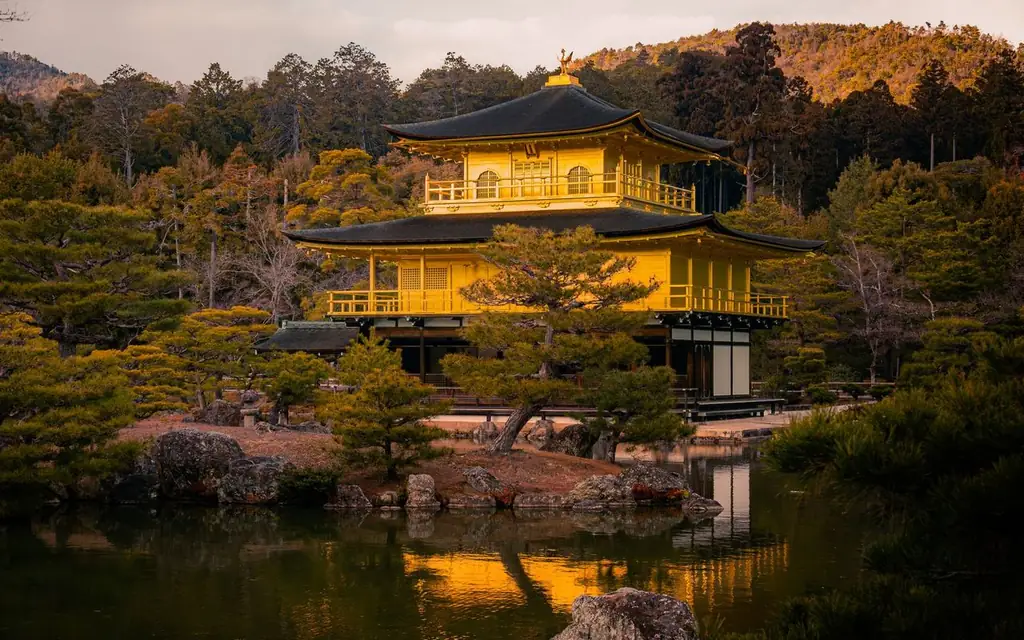
- Fushimi Inari and Kinkaku-ji. The two sit at opposite ends of the city, about 14 km (9 miles) apart, 35 to 60 minutes by car. See our guide to Kinkaku-ji, which opens at 9:00, so Fushimi Inari first and the Golden Pavilion in the late morning works well.
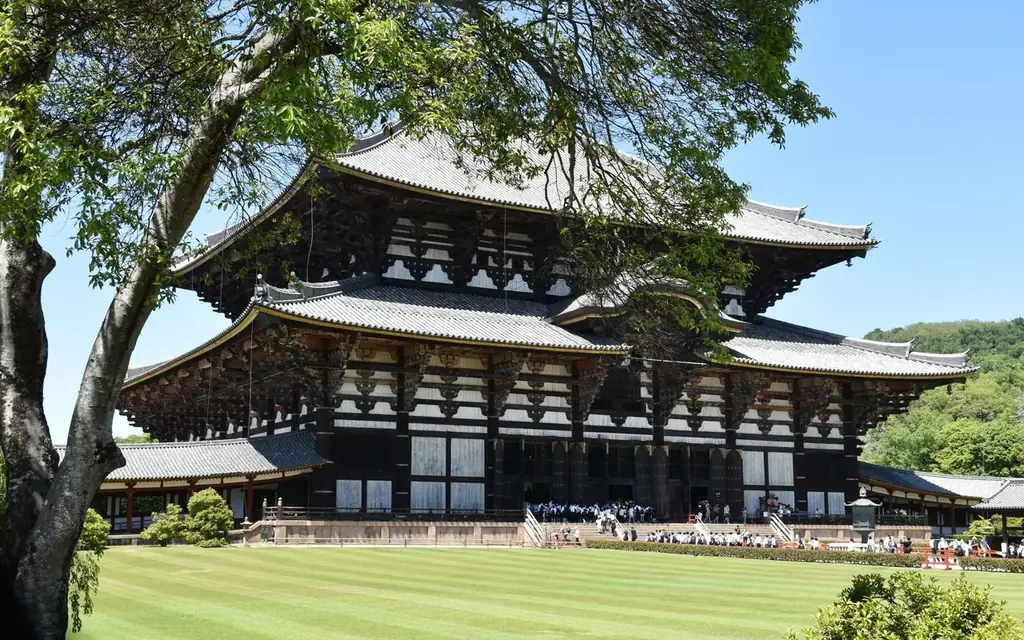
- Fushimi Inari, then Nara. Nara is about 40 km (25 miles) south; see Nara Park and Todai-ji for the drive and the deer park. This is a full day.

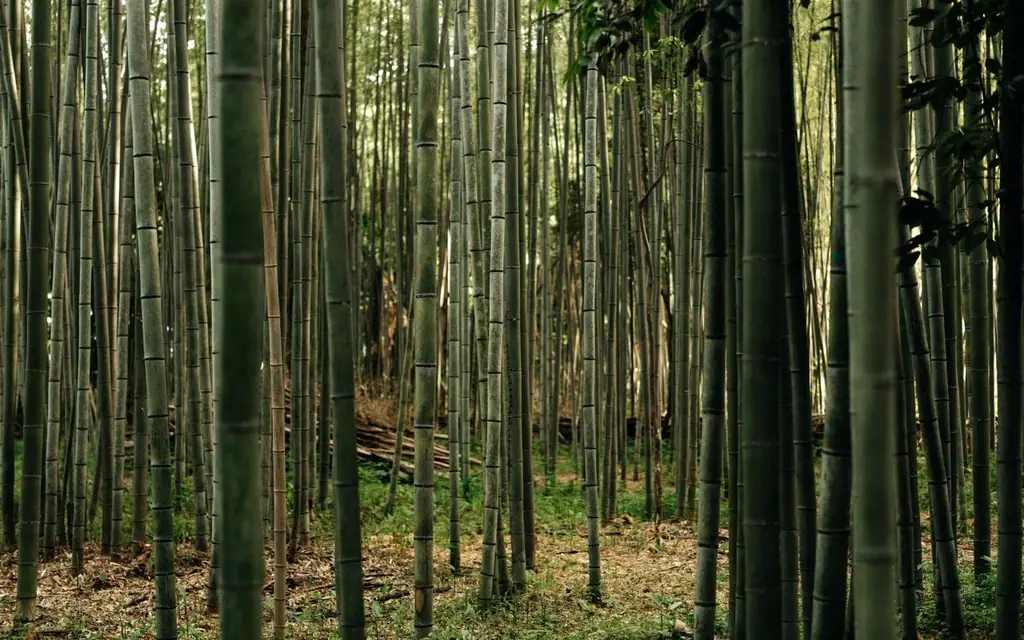
Arashiyama is on the western side of the city; our Arashiyama bamboo grove guide fits a second day. For help with multi-stop planning, see the private tours with driver page.
What to wear, carry and ask the chauffeur to hold
Fushimi Inari is a hike in city clothes more often than visitors expect. The steps are stone, they are uneven in places, and the shaded sections stay damp after rain. Sturdy flat shoes make the walk safer and more comfortable than sandals or leather soles. Bring water, because the rest areas on the way up are small, and a light layer for the descent, when the air under the trees cools quickly in the late afternoon.
Leave in the car whatever you do not need: large cameras, spare bags, umbrellas if the forecast is dry. The shrine's request to visitors prohibits drones and commercial photography, so professional equipment has no place on the paths. If your group includes someone who plans to wait rather than climb, the small streets around the main approach offer shops and snacks, and the chauffeur can pick them up from a quieter spot if they would rather sit in the car.
For travelers arriving from the airport straight to Kyoto, the desk can arrange for the luggage to go to the hotel first while you walk the shrine, or for the cases to stay in the vehicle under the chauffeur's care for the duration. Say which you prefer at booking.
Seasons: blossom, autumn color and the festival calendar
Kyoto's seasonal peaks hit Fushimi Inari as they hit every famous site in the city. Late March and early April bring cherry blossom visitors, and November brings the autumn color crowds. In those weeks the first section of the path can be slow-moving from mid-morning, and the roads around the shrine are congested for the whole day. On a plain weekday in mid-winter or the damp part of summer, the shrine is much easier.
The shrine hosts traditional festivals through the year, and these also pull crowds. Because the shrine's English site gives no dates in the pages we checked, treat any date you read elsewhere as provisional and confirm with the shrine. If your trip coincides with a festival, an early start and a plan to use the quieter upper paths will keep the visit enjoyable.
Getting there compared
| Mode | From Kyoto Station | Cost note | Suits |
|---|---|---|---|
| JR Nara Line to JR Inari Station | About 9 minutes, shrine next to the station | Lowest | Nearly every solo traveler |
| Keihan Main Line to Fushimi-Inari Station | About 22 minutes from Gion-Shijo, then a 5 minute walk | Lowest | Visitors staying around Gion or Shijo |
| City bus | Variable; the Kyoto city site advises avoiding South No. 5 | Per-ride fare | Last resort when trains are disrupted |
| Street taxi | 15 to 30 minutes | Metered | A short ride from a nearby hotel |
| Private chauffeur car | 15 to 30 minutes from Kyoto Station | Fixed fare, quoted before you book | Airport arrivals, families, luggage-heavy days, multi-stop programs |
The verdict: from Kyoto Station, the JR train is faster than any car and almost free. A chauffeur is the better choice from Kansai or Itami airports, with a group, in rain, with mobility needs, or when Fushimi Inari is one stop in a day that includes places the trains reach awkwardly.
Comfort, discretion and trade bookings
Ask for a child or booster seat when you book if the youngest in your group is small; the higher paths are not for toddlers, but the first section is manageable. A bottle of water waits in most cars. If you value privacy, an alias booking and an NDA can be arranged, and the chauffeur will not photograph or post about the walk. Your own security team can accompany you on the paths, as the chauffeur only drives.
Frequently asked questions
Is there parking at Fushimi Inari Taisha?
Limited parking exists for shrine visitors only, and staff direct you to other parking if the lots are full. The shrine recommends public transport.
How far is Fushimi Inari Taisha from Kyoto Station?
About 5 km (3 miles), 15 to 30 minutes by car. The JR Nara Line takes about 9 minutes.
How far is Fushimi Inari from Kansai Airport?
About 90 to 95 km (56 to 59 miles), usually 1 hour 15 minutes to 2 hours by car.
Is Fushimi Inari free?
Yes. There is no admission charge for the shrine grounds.
How long does it take to hike Mount Inari?
Guides commonly give two to three hours for the full loop, about 90 minutes to the halfway viewpoint and 30 to 45 minutes for the first section of gates.
Can I fly a drone or do a commercial shoot?
No. The shrine prohibits drones and commercial photography.
When is Fushimi Inari least crowded?
Early morning is the quietest. Midday and weekends are the busiest.
Can a chauffeur wait while I hike?
Yes. The car parks nearby or stays on call, and you message when you come down.
Is the shrine suitable for children and older visitors?
The first section is easy; the higher paths have many steps. Choose the short walk if anyone struggles with stairs.