 United StatesJFK
 MexicoMEX
 BrazilGRU
 ArgentinaEZE
 ChileSCL
 ColombiaBOG
 PeruLIM
 PanamaPTY
 Costa RicaSJO
 Dominican RepublicPUJ
 JamaicaMBJ
 BahamasNAS
 BarbadosBGI
 United KingdomLHR
 IrelandDUB
 FranceCDG
 GermanyFRA
 NetherlandsAMS
 BelgiumBRU
 SwitzerlandZRH
 AustriaVIE
 ItalyFCO
 SpainMAD
 PortugalLIS
 GreeceATH
 TurkeyIST
 DenmarkCPH
 SwedenARN
 NorwayOSL
 FinlandHEL
 PolandWAW
 Czech RepublicPRG
 HungaryBUD
 IcelandKEF
 United Arab EmiratesDXB
 QatarDOH
 Saudi ArabiaRUH
 IsraelTLV
 EgyptCAI
 MoroccoCMN
 South AfricaJNB
 KenyaNBO
 NigeriaLOS
 IndiaDEL
 PakistanLHE
 Sri LankaCMB
 SingaporeSIN
 MalaysiaKUL
 ThailandBKK
 VietnamSGN
 PhilippinesMNL
 IndonesiaCGK
 Hong KongHKG
 ChinaPVG
 TaiwanTPE
 JapanHND
 South KoreaICN
 AustraliaSYD
 New ZealandAKL
What is the best way to see Osaka Castle and Dotonbori in one day by car?
Start at Osaka Castle in the morning and finish at Dotonbori after dark. The two are about 5 km (3 miles) apart, a 15 to 25 minute drive. A chauffeur handles the transfer between them, the airport run and the drop-off points, because neither place has a convenient curb.
Osaka rewards a split-day approach. The castle park is open at all hours and is at its best before the crowds, in clean morning light. Dotonbori is the opposite: shuttered and quiet in the morning, then at full volume once the signs come on. Treating them as one 14-hour day, with a rest in the middle, is easier on the legs and gives you each place at its most useful hour.
Below you will find the facts that shape a car-based visit: how the park and the district are laid out, which parts are free, how to get in from Kansai Airport and Itami, and where a driver can actually leave you. If you are building a longer trip, our general page on private tours with driver explains how the multi-stop days work.
Two places, one city, opposite moods
Osaka Castle sits in the middle of a 105.6-hectare park, according to the Osaka tourism bureau's park page. The park is free and open at all times; individual facilities inside it keep their own closing days. The castle itself was begun by Toyotomi Hideyoshi in 1583, but the present main keep is a reconstruction from the early twentieth century, and the park's own site gives 7 November 1931 as its opening date. Inside, the keep is a modern museum with views over the city.
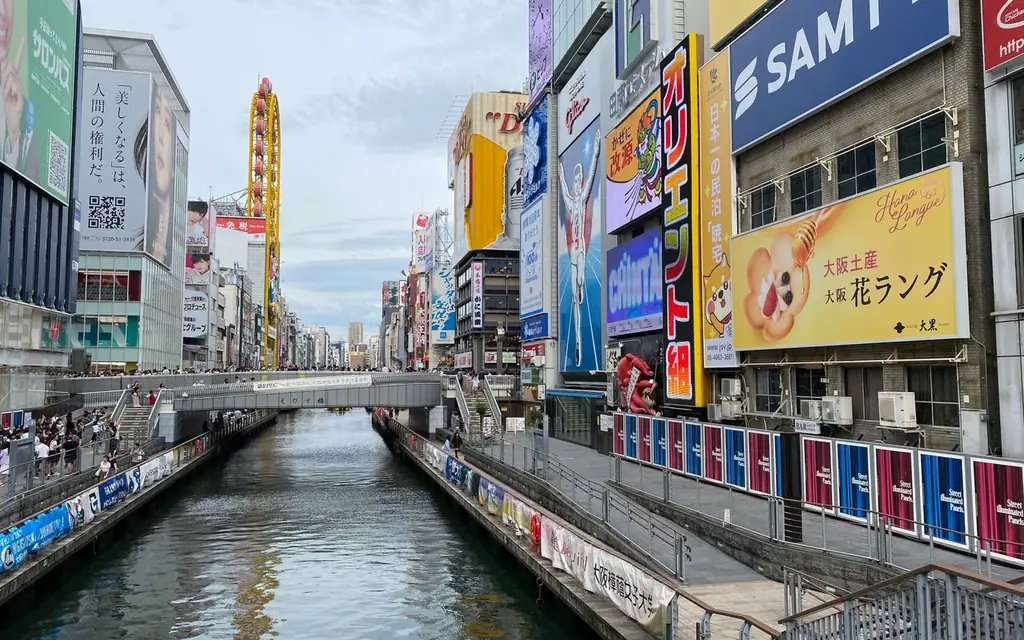
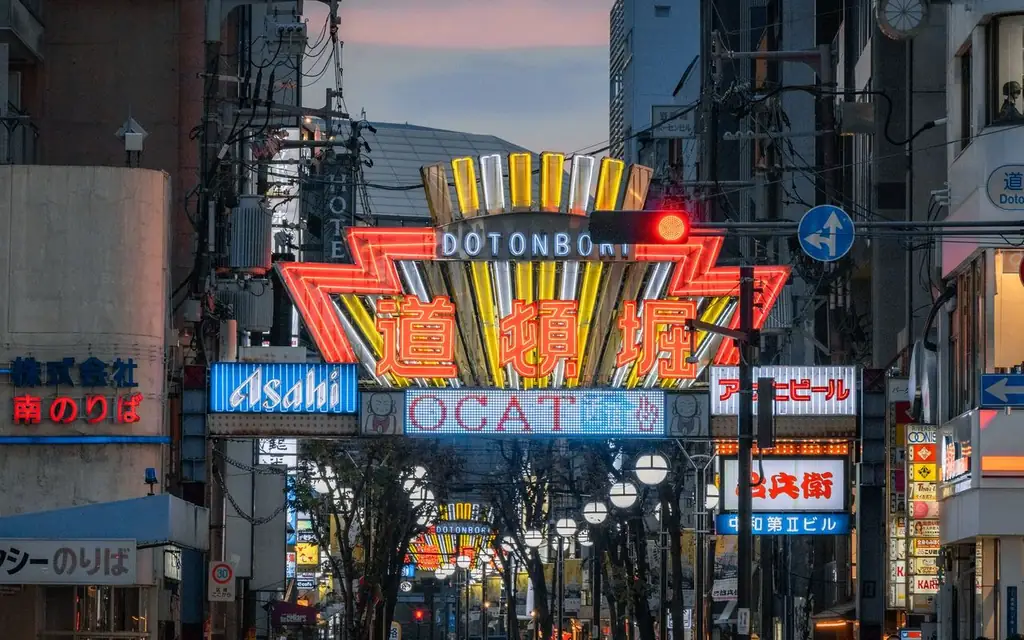
Dotonbori is a canal-side entertainment district in Minami, the southern center of the city. The Osaka tourism bureau's Dotonbori page says the district takes its name from Doton Yasui, who funded the excavation of the river in 1612. The area grew around theaters and teahouses, and today it is about food, large three-dimensional shop signs and the canal. The runner on the Glico sign, which the Japan National Tourism Organization dates to 1935, is the best-known landmark.
Osaka Castle: the park, the keep and the entry facts
The park is where most of your time will go. A rough way to divide it:
- The outer park and moats. Wide paths, stone walls and gates, good for a walk of an hour or more. Free at all hours.
- Nishinomaru Garden. A garden with about 300 cherry trees, according to the Osaka bureau, which stages evening cherry blossom events in spring. It has its own entry hours and fee.
- The plum grove. About 1,245 trees across 105 varieties; the season is late winter.
- The keep (Tenshukaku). The main museum, with an observation floor. The keep sells timed, advance tickets through the official web ticket page linked from osakacastle.net. Sold-out dates are common in peak seasons, so book ahead if the keep is your priority.
The park's stations are Tenmabashi and Tanimachi 4-chome on the Tanimachi Line, Morinomiya and Tanimachi 4-chome on the Chuo Line, and Morinomiya and Osakajokoen on the JR Loop Line. The keep is a long walk from any of them, which is one reason a drop-off nearer to the main gate saves time.
Check the keep's hours and fee on the official page before you go. They differ by season and during special exhibitions, and secondary listings do not always match.
Dotonbori: the canal, the signs and the Glico Man
Dotonbori is best understood as a short walk with a purpose. The strip along the canal is about the length of a few city blocks, packed with restaurants, arcades and neon. Highlights include:
- The Glico sign above the canal, the most photographed spot, usually viewed from Ebisu Bridge.
- Kani Doraku, known for its large mechanical crab above the shopfront.
- Kushikatsu Daruma, with a rotating rooftop figure.
- The Tombori Riverwalk, a lower walkway along the water reached by stairs. It is calmer than the street above and gives a clean view of the signs reflected in the canal.
- Street food. Takoyaki (octopus dumplings) and okonomiyaki (savory pancakes) are the district's signature dishes.
Business hours vary by shop, so there is no single opening time. A short detour worth knowing is Sennichimae, a covered arcade just south of the main strip that is lined with cookware and kitchen shops; it suits a quiet daytime browse when the neon strip is still asleep. The street is open all day; the atmosphere changes after sunset, and the peak is evening. Ebisu Bridge, directly under the Glico sign, is the congestion point, so shoot it quickly or choose the Riverwalk for a quieter angle.
Getting in: Kansai, Itami and the Shinkansen
Three arrival points matter for this trip.

- Kansai International (KIX): about 43 to 46 km (27 to 29 miles) to Namba by road, typically 40 to 45 minutes. To Osaka Castle expect roughly 50 km (31 miles) and 50 to 70 minutes, depending on bridge and expressway traffic.
- Osaka Itami (ITM): about 17 km (11 miles) to Osaka Castle, usually 25 to 45 minutes, longer at rush hours.
- Shin-Osaka Station: about 7 km (4 miles) to the castle, typically 20 to 35 minutes. Many visitors arrive here by Shinkansen and transfer directly.
The airports we serve are listed in the airports directory, and the Asia-Pacific directory groups the region's cities. If your journey begins in Tokyo, the Tokyo chauffeur service page covers that end; the Tokyo to Osaka leg itself is a train journey, not a car journey.
Flights from Kansai land at all hours, and the desk tracks every airport pickup, so the driver follows the actual arrival time. Large bags go into the vehicle, and you can go straight to the castle or to the hotel first. Tell the desk if you want the hotel stop first so that the day does not begin with luggage.
Where the car stops at Osaka Castle
The park has many gates, and the practical question is which one you need. Do not treat the nearest address on a map as the entry point; the walking distance from the road to the keep is long, and the best curbside points are limited.
What a local driver will normally do:
- Drop at the gate closest to the keep. From there the walk to the main tower is shorter than from the stations.
- Wait or return. Parking exists in and around the park (the Osaka tourism bureau lists parking among the park's amenities), but the lots fill on weekends and in cherry blossom season. The driver confirms the lot on the day.
- Pick up at a different gate if you plan to walk a loop around the moat. Agree the meeting point before you leave the vehicle, because the park is large and phone signals do not tell you which side of the moat you are on.
The park also hosts concerts at Osaka Castle Hall and the Music Hall, seasonal plant markets in spring and autumn, and evening cherry blossom events at Nishinomaru Garden, all of which can change traffic and curb space near the gates. Keep an eye on the event calendar if you are traveling on a weekend.
Where the car stops at Dotonbori
Do not expect to be driven into Dotonbori. The main strip is pedestrian-priority, with heavy foot traffic from late afternoon, and the lanes around it are narrow. The reliable approach is to be dropped at a through road on the edge of Minami, then walk a few minutes in.
- Namba Station area: the district is right outside Namba Station, served by the Nankai and Kintetsu railways and by the Osaka Metro Midosuji, Sennichimae and Yotsubashi lines, according to the Osaka tourism bureau. It is the natural reference point for pickups.
- Timing the return: after about 21:00 the area is full of pedestrians and the nearby streets clog. Agree a pickup time and point in advance and have the driver call when he is close, instead of waiting at the curb.
- A tip for groups: if you split the evening into dinner and a walk, tell the driver which end you will finish at. Dotonbori runs along the canal, and the two ends are several minutes apart on foot.
Tickets and timing
- Castle park: free and open at all times.
- Keep (Tenshukaku): ticketed, with advance online booking available through the official site. Peak seasons include cherry blossom weeks, Golden Week in early May, the summer holidays and autumn weekends.
- Dotonbori: free; you pay for food, drinks and attractions. There is no timed entry.
- Best hours: the castle in the first hour after the keep opens, then Dotonbori from around 17:00 for the first lights and a table before the crowds build. Weekends bring dense crowds to both.
The castle and the district keep different closing days and holiday schedules, so check each on the day. Like most Japanese attractions, the keep closes for a few days around the New Year, so check the dates if you travel at the turn of the year.
From castle morning to canal night
This plan assumes a hotel in central Osaka or Umeda.
- 8:30 – Pickup and transfer to the castle gate. About 20 to 30 minutes, depending on the hotel.
- 9:00 to 11:30 – The castle park and keep. If you have a timed ticket, schedule the keep first, then walk the moats and Nishinomaru Garden.
- 11:30 to 13:00 – Lunch near the park or back in the city.
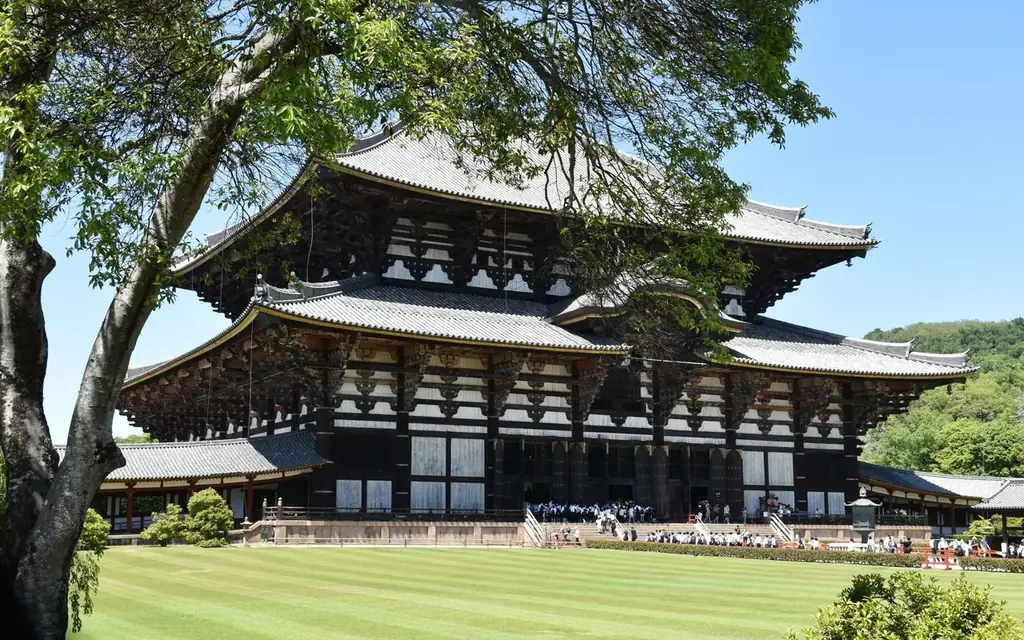
- 13:00 to 17:00 – Free time or a second sight. A day trip to nearby Nara is possible; see our post on Nara Park and Todai-ji. A rest at the hotel is also a good use of the break.
- 17:30 – Transfer to Minami. About 15 to 25 minutes to a drop-off on the edge of the district.
- 18:00 to 21:00 – Dotonbori. Take a walk on the Tombori Riverwalk, find a table, and keep the Glico sign for last.
- 21:30 – Pickup. Back to the hotel or to the airport for a late flight.
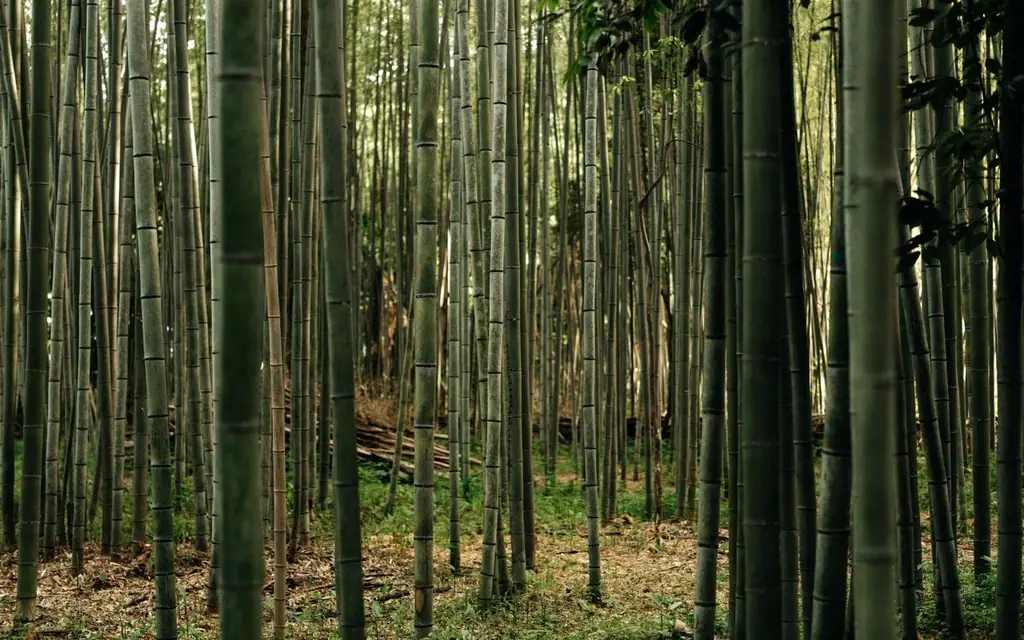
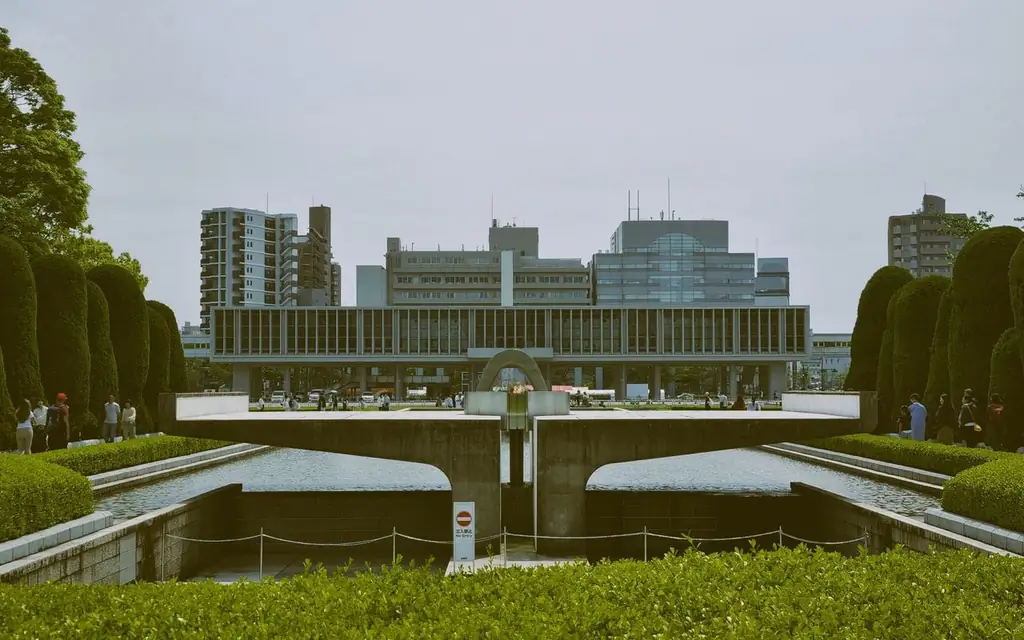
Visitors with more days can extend this loop. The western Kyoto sights, such as the Arashiyama Bamboo Grove, fit well on a separate day, and travelers heading farther west can read about the memorial park in Hiroshima. The trip between Osaka and Hiroshima is usually best done by Shinkansen, with a chauffeur at each end.
Tourist offices and visitor bureaus can arrange chauffeur services for visitors through a trade account; the Asia-Pacific tourist offices page explains how.
Metro, taxi or chauffeur in Osaka
| Mode | Time | Cost note | Fit |
|---|---|---|---|
| JR Loop Line to Osakajokoen | 10 to 20 minutes from central stations | Lowest | Solo visitors with a light bag |
| Osaka Metro to Tanimachi 4-chome or Tenmabashi | 10 to 25 minutes | Lowest | Anyone staying near a metro line |
| Metro or rail to Namba for Dotonbori | 5 to 20 minutes | Lowest | Evening visits without luggage |
| Taxi | 15 to 30 minutes, more in the rush hour | Metered | Two or three people, late return |
| Private chauffeur | 15 to 25 minutes between the two sights; airport runs as above | Fixed fare via the booker | Families, groups, airport-to-sight days, late nights |
In central Osaka the metro is fast and reliable, and for a single traveler with no luggage it is the better choice. A chauffeur makes more sense when you land at Kansai or Itami and want to go straight to a sight, when the group is large, when anyone has limited mobility, or when you want a guaranteed late-night return after Dotonbori.
Frequently asked questions
How far is Osaka Castle from Dotonbori by car?
About 5 km (3 miles), usually 15 to 25 minutes depending on traffic. The Dotonbori strip is pedestrian-priority, so a car drops you at a nearby through road and you walk the last few minutes.
Can a car drive into Dotonbori?
Not into the main strip. It is a pedestrian-priority street with heavy foot traffic in the evening. A chauffeur leaves you on a nearby road close to Namba and you walk in.
Is Osaka Castle Park free?
Yes. The park is free and open at all times, according to the Osaka tourism bureau. The keep, Nishinomaru Garden and some other facilities charge separate fees and keep their own hours.
Do I need to book tickets for the castle keep?
Advance tickets are available through the keep's official web ticket page, and it is wise to use it on busy dates. Check the current opening hours and prices on osakacastle.net before you go.
What is the best time to see the Glico sign in Dotonbori?
After dark, when the signs are lit and the canal reflects them. Ebisu Bridge is the most crowded viewpoint, so also try the Tombori Riverwalk below street level for a quieter view.
How far is Kansai Airport from Osaka Castle?
Roughly 50 km (31 miles), typically 50 to 70 minutes by road. Itami Airport is much closer, about 17 km (11 miles), and usually 25 to 45 minutes.
How long should I allow for Osaka Castle?
Allow 2 to 3 hours for the park and the keep, longer if you add Nishinomaru Garden. Dotonbori takes 2 to 3 hours in the evening if you include dinner.
How do I book a car for both the castle and Dotonbori?
Request a morning pickup and a late-evening return in the online booker, which prices the exact addresses up front. Flight tracking covers any Kansai or Itami airport leg, and one confirmation and invoice covers the whole day.