
 United StatesJFK
 MexicoMEX
 BrazilGRU
 ArgentinaEZE
 ChileSCL
 ColombiaBOG
 PeruLIM
 PanamaPTY
 Costa RicaSJO
 Dominican RepublicPUJ
 JamaicaMBJ
 BahamasNAS
 BarbadosBGI
 United KingdomLHR
 IrelandDUB
 FranceCDG
 GermanyFRA
 NetherlandsAMS
 BelgiumBRU
 SwitzerlandZRH
 AustriaVIE
 ItalyFCO
 SpainMAD
 PortugalLIS
 GreeceATH
 TurkeyIST
 DenmarkCPH
 SwedenARN
 NorwayOSL
 FinlandHEL
 PolandWAW
 Czech RepublicPRG
 HungaryBUD
 IcelandKEF
 United Arab EmiratesDXB
 QatarDOH
 Saudi ArabiaRUH
 IsraelTLV
 EgyptCAI
 MoroccoCMN
 South AfricaJNB
 KenyaNBO
 NigeriaLOS
 IndiaDEL
 PakistanLHE
 Sri LankaCMB
 SingaporeSIN
 MalaysiaKUL
 ThailandBKK
 VietnamSGN
 PhilippinesMNL
 IndonesiaCGK
 Hong KongHKG
 ChinaPVG
 TaiwanTPE
 JapanHND
 South KoreaICN
 AustraliaSYD
 New ZealandAKL
How close can a car get to Kinkaku-ji?
Closer than at most Kyoto temples. Kinkaku-ji operates its own car park for 250 cars, open from 8:40 to 17:10, and a chauffeur can use it. The temple opens at 9:00, and the garden is walked along a numbered route.
That parking fact is unusual for Kyoto, where most famous temples sit on narrow lanes with limited or no space for cars, and it makes a Kinkaku-ji private tour with driver more straightforward than many other stops in the city. You can be dropped, or park, within a short walk of the entrance. The remaining difficulties are the city's traffic and the crowds: the Kyoto city tourism site warns that travel by road can take more than twice as long as expected because of traffic jams and congestion.
The temple's official name is Rokuon-ji, and it belongs to the Shokoku-ji group; Kinkaku-ji is the common name for its most famous building, the Golden Pavilion. This guide covers the drive from Kyoto Station and the airports, the temple's parking and hours, the route through the garden, the best time to arrive and what to combine it with. For help with a multi-stop day, the private tours with driver page explains hourly and full-day cars.
The temple's parking, as the temple states it
The access page of the Shokoku-ji group gives the details, and they are worth knowing before you plan a tight timetable.
- Car park hours: 8:40 to 17:10.
- Capacity: 250 cars.
- Fees listed as of 2026: for a passenger car, 400 yen for the first 60 minutes and 200 yen for each additional half hour; for a minicoach, 600 yen and 300 yen; for a bus, 1,300 yen and 650 yen.
- A parking map is available as a PDF on the page.
For a typical visit of 60 to 90 minutes, a chauffeur can park and wait, or drop you and circle. Outside the 8:40 start the car park is closed, so an arrival before the opening time means waiting on the road. The temple itself opens at 9:00 and, according to the official page, closes at 17:00.
Since parking is sold by time, the chauffeur will usually park once and wait in the car, which is convenient if you want to leave your coats and shopping behind. If the car park is full at a peak time, the chauffeur will use a nearby lot and message you the meeting point.
You can read the official access page and the temple's main page for the current details.
The pavilion and why people queue for it
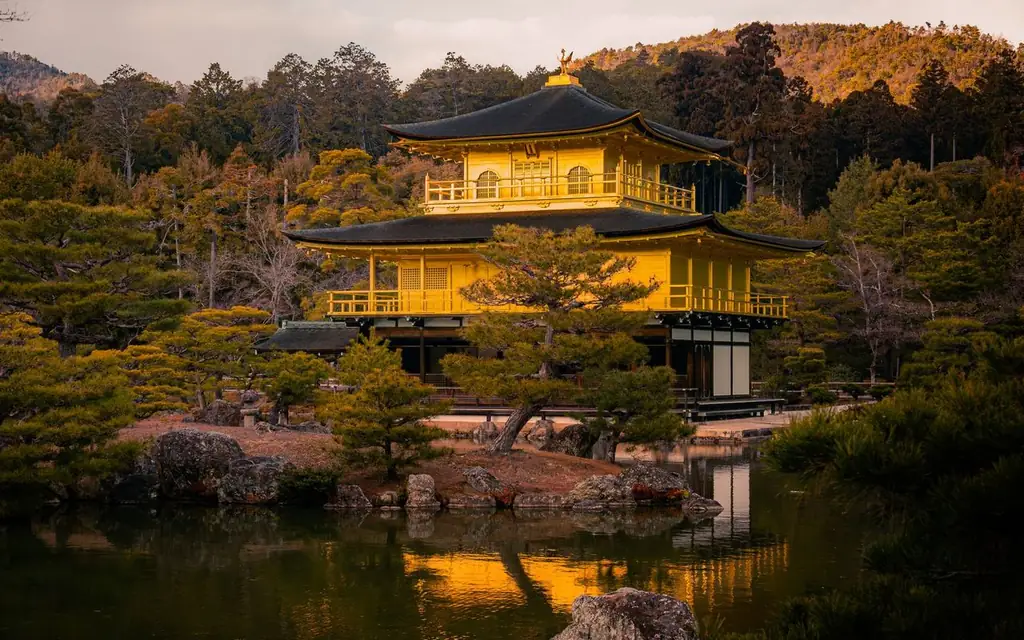
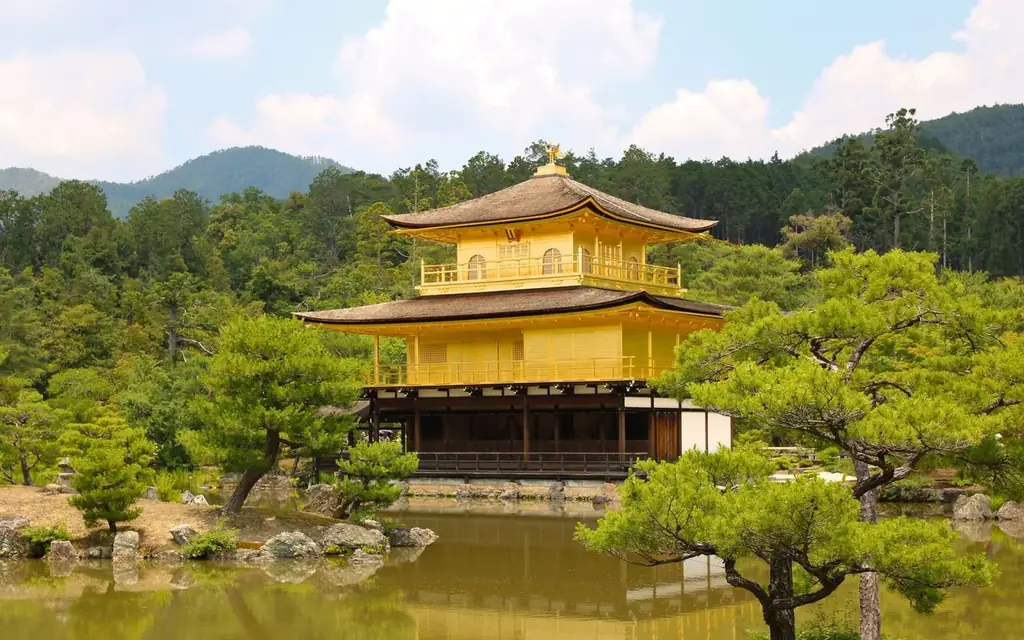
The Golden Pavilion is a three-story building beside a pond, with the upper floors covered in gold leaf. The temple's guide states that its lacquer and gold leaf were reapplied in the autumn of 1987. The pavilion was built as part of a retreat for the shogun Ashikaga Yoshimitsu in the late fourteenth century, and the building you see today is a reconstruction after a fire in 1950. It forms part of the Historic Monuments of Ancient Kyoto, a World Heritage listing.
You do not enter the pavilion; you view it across the pond. The classic photograph is from the shoreline just inside the gate, where the building reflects in the water. That is also where the crowd gathers, and the walkway is arranged so that visitors move along in a stream rather than stopping at the best spot. Take your photographs, then keep moving; the rest of the garden is quieter and more rewarding than the first stretch.
The temple's address is 1 Kinkakuji-cho, Kita-ku, Kyoto 603-8361, in the northwest of the city. It is far from the Kyoto Station area, which is why the car or bus is the usual way to reach it.
Walking the route: what you pass, in order
The temple's own guide lists a route of twenty points, which gives a reliable picture of the visit. In order, the main points are the main gate, the belfry, the temple's living quarters, a famous tree, the Chinese-style gate, the memorial tower, an island in the Kyoko-chi pond, the Golden Pavilion itself, the main hall, a famous pine tree, a spring and a stream, the Kokei-kyo bridge, Ryumon Falls, Anmin Pond, a white snake mound, the Sekkatei tea house, the stamp office and the Fudo-do hall.
Some notes from the guide:
- The garden covers 92,400 square meters of roughly 132,000 square meters of grounds, so the walk is longer than the photographs suggest.
- The Fudo-do's principal image is hidden from public view. Its doors open only during the Setsubun festival and on August 16.
- The Sekkatei tea house is reached by a mountain path past the Anmin pond.
- A 360-degree virtual tour and a live camera of the pavilion are available on the temple site, which is a useful way to check the weather and crowd before you leave.
Allow 45 to 75 minutes on foot for the full route, including photographs. The guide describes a numbered route, and the walkway is arranged to keep visitors moving in one direction. You can read the guide on the temple's route page.
Getting to Kinkaku-ji from the airports and Kyoto Station

- From Kyoto Station: about 9 km (5.5 miles), usually 25 to 45 minutes by car, longer in peak periods. The city site gives about 40 minutes by public transport.
- From Kansai International (KIX): about 100 km (62 miles), typically 1 hour 30 minutes to 2 hours 15 minutes.
- From Itami (ITM): about 55 km (34 miles), generally 55 to 85 minutes.
- From Fushimi Inari: about 14 km (9 miles), 35 to 60 minutes. See our Fushimi Inari guide.
Our airports hub lists the airport pages in the directory; for Kyoto the pickup is arranged through a local operator and the desk confirms terminal and meeting point at booking. Flight tracking is included on every airport pickup, and international arrivals include 60 minutes of free waiting after landing. A name-board meet-and-greet is available as an add-on.
Choosing your hour: 9:00 opening, midday and late afternoon
The temple opens at 9:00 and closes at 17:00, according to its official page, and the crowd behaves in predictable waves.
- The first hour after opening is the quietest. Arrive at the gate a few minutes before 9:00 so you enter with the first group, and walk the route at your own pace. A morning arrival also means the car park is empty.
- Late morning to mid-afternoon is the busiest, when tour groups and school parties arrive together. The path moves more slowly and the view of the pavilion is crowded.
- The final hour before closing is quieter again and the light is warmer, but you have less time to explore the further parts of the garden.
Weather affects the view. In bright sun the gold leaf is dazzling; on a grey day, the reflections are softer and the crowd is thinner. In rain the temple is atmospheric and quieter, and the car park is a short walk from the gate, which makes an umbrella manageable. Use the live camera on the temple's website to check conditions before you commit.
Arriving by Shinkansen with luggage: the Kyoto Station problem
Many visitors reach Kyoto on the Tokaido Shinkansen from Tokyo with two or three bags, and Kinkaku-ji is not on a rail line. The city buses that serve it are the same buses that serve every popular temple in the north, and the Kyoto city site itself advises riders to avoid boarding at Kyoto Station to reduce crowds. A bus with a suitcase in the aisle is nobody's idea of a good start.
The chauffeur alternative is simple. The car meets you at the Shinkansen exit at Kyoto Station, or at the hotel if you have already checked in, and takes you directly to the temple car park. The luggage stays in the vehicle while you walk the garden, and the car continues to your hotel afterwards. For a morning arrival from Tokyo, that sequence puts you at the gate close to the 9:00 opening with no bag-handling in between. Tell the desk your train number; flight tracking applies to airport arrivals, and for train arrivals the pickup time is set from the scheduled arrival and confirmed with you.
If you arrive in Kyoto in the evening and plan Kinkaku-ji for the next morning, the same logic applies the other way. Ask for a pickup from the hotel at 8:30, which lands you in the car park as it opens at 8:40 and at the gate for 9:00. The garden walk, the tea house and a coffee stop fit inside a 90-minute window, leaving the late morning free for the next stop.
A wet-weather plan, and a clear-sky plan
Kyoto has a rainy season in early summer and showers at other times, and the temple is one of the sights that changes character with the weather. Both versions are worth having in mind.
- Rain. The pond surface becomes a darker mirror, the crowd is thinner and the gold stands out against a grey sky. The route is outdoors, so take a compact umbrella and waterproof shoes. Because the car park is close to the gate, you are never far from a warm, dry vehicle.
- Bright sun. The gold leaf glares at midday and the reflection is strongest in the late morning. Arriving at opening gives you the best light on the pavilion before the crowd builds.
- Hot summer days. The route is exposed in places. Drink water, wear a hat and keep the visit short; the car park lets you return to an air-conditioned vehicle quickly.
- Cold days. The upper garden and the tea house path are cooler. Bring a layer.
Before you leave, look at the temple's live camera. It will tell you whether the pavilion is clear, whether the queue at the gate is long and whether the weather has turned.
A Kyoto day built around the Golden Pavilion
Kinkaku-ji lies in the north-west, so it combines naturally with sights in that part of the city and with Arashiyama to the west.
- 8:40, arrive at the car park. Wait for the gate to open at 9:00.
- 9:00 to 10:15, Kinkaku-ji. Walk the route, finish at the tea house or the Fudo-do.
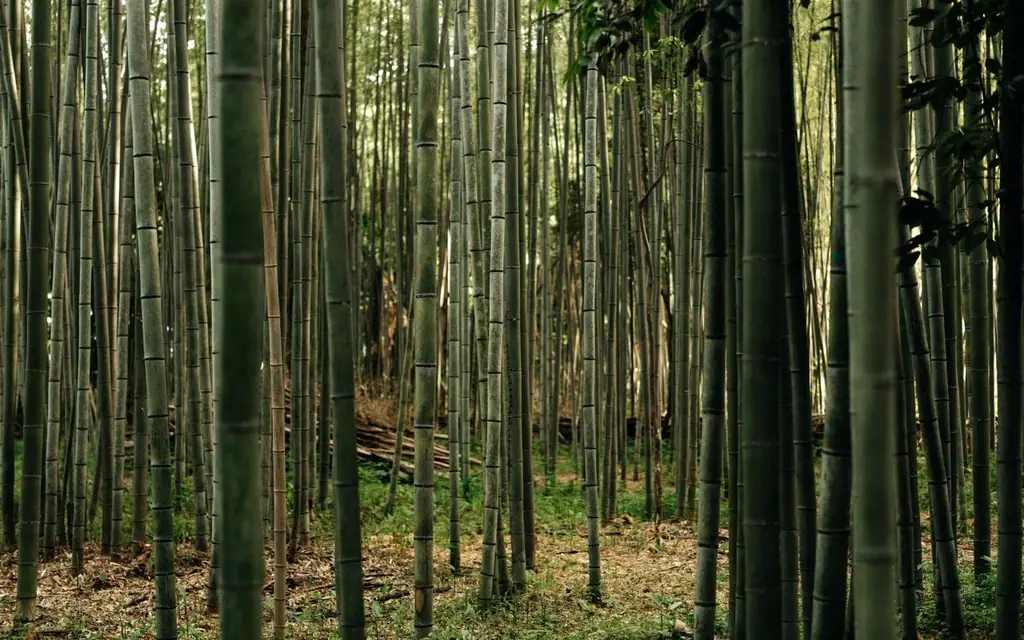
- 10:45, Arashiyama. About 8 km (5 miles) west, 20 to 35 minutes by car; see our Arashiyama bamboo grove guide.
- 13:00, lunch in Arashiyama or the northern districts.
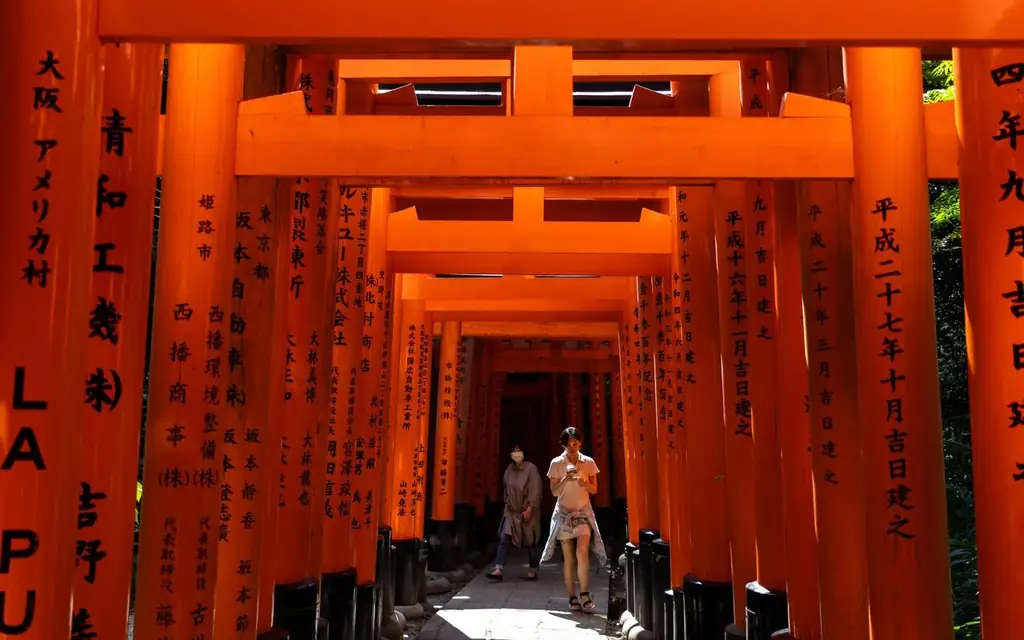
- 15:00, Fushimi Inari or the city center. For the south-eastern shrine, see Fushimi Inari Taisha; allow 40 to 60 minutes by car.
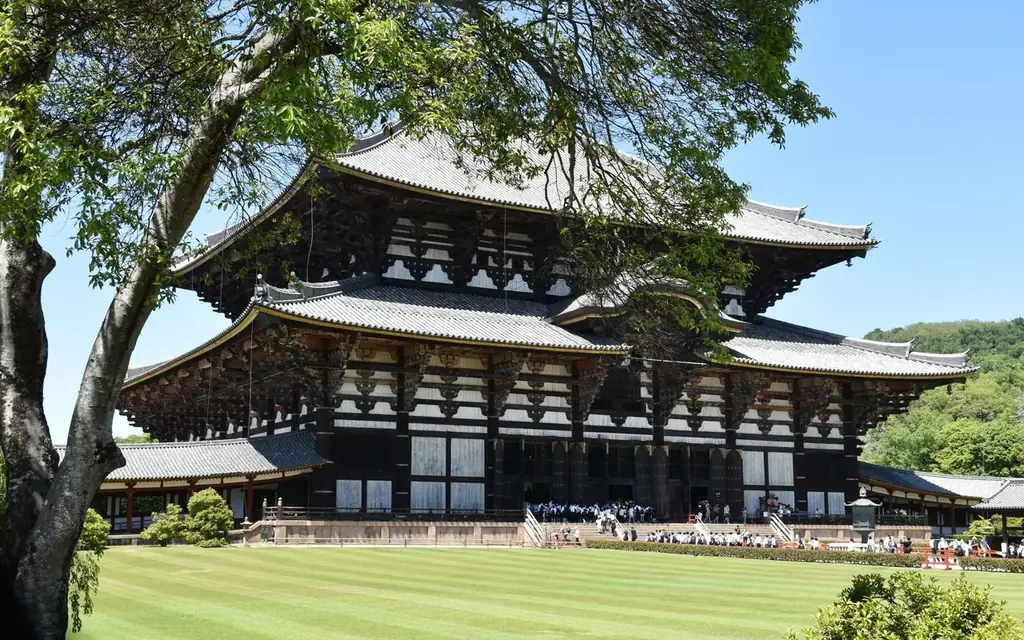
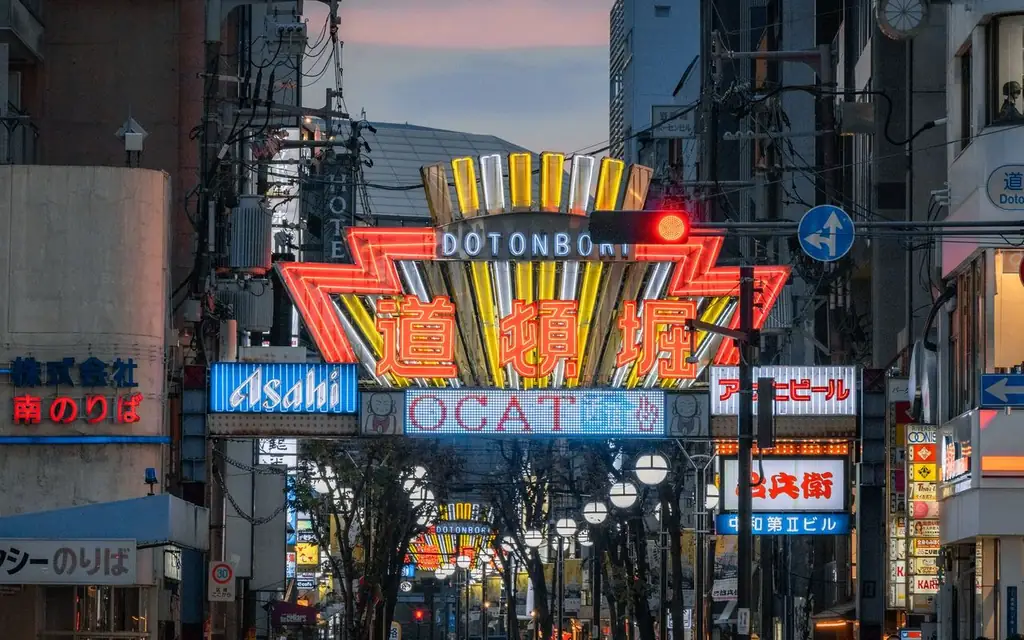
For a longer program that includes Nara or Osaka, see our guides to Nara Park and Todai-ji and Osaka Castle and Dotonbori. Licensed guides are separate professionals who can be booked with the car on request; a chauffeur drives and can suggest stops.
Getting there compared
| Way to reach it | Time from Kyoto Station | Cost note | Best when |
|---|---|---|---|
| City Bus (No. 12, 59, 205 or M1) to Kinkakuji-michi | About 40 minutes, according to the city site | Lowest | Solo travelers who do not mind a crowded bus |
| JR Sagano Line to Enmachi, then bus | Variable; the city site suggests avoiding Kyoto Station boarding to reduce crowds | Lowest | Rail-pass holders with spare time |
| Street taxi | 25 to 45 minutes | Metered | Short rides from city hotels |
| Private chauffeur car | 25 to 45 minutes, door to door | Fixed fare, quoted before you book | Airport arrivals, families, groups, multi-stop days |
The honest assessment: Kyoto's city buses are low in cost and reach the temple directly, but they run slowly and are crowded in season. A car is the better choice when you have luggage, a group, mobility needs, children, a tight timetable or several stops in the north and west. For a single visitor with a flexible day, the bus works.
Accessibility, etiquette and discretion
The route is a single walking circuit that includes a mountain path to the tea house, so expect slopes and steps in the upper garden; if mobility is an issue, tell the desk so the chauffeur can drop you at the nearest point. Keep to the path, avoid blocking the flow at the main viewpoint, and keep your voice low.

For families, a booster or child seat can be added at booking, and the garden route is easy enough for school-age children. Travelers who need discretion can book under an alias, and the chauffeur does not photograph or post about the visit. Kyoto's tourism boards and visitor centres can book chauffeur services for their visitors with LimousineWorldwideDirectory.com through a trade account; start from the Asia-Pacific tourist offices page, and see the wider region in the Asia-Pacific directory. For the Kyoto city tourism guide on getting around, see kyoto.travel.
Frequently asked questions
Does Kinkaku-ji have parking?
Yes. The temple has a car park for 250 cars, open 8:40 to 17:10, with fees by the hour for cars, minicoaches and buses.
What time does Kinkaku-ji open?
The official page lists 9:00 to 17:00.
How far is Kinkaku-ji from Kyoto Station by car?
About 9 km (5.5 miles), usually 25 to 45 minutes depending on traffic. Public transport takes roughly 40 minutes, according to the city.
How far is Kinkaku-ji from Kansai Airport by car?
About 100 km (62 miles), typically 1 hour 30 minutes to 2 hours 15 minutes.
Can I go inside the Golden Pavilion?
No. You view the pavilion from across the pond. The garden route continues to a tea house and other halls.
How long does a visit take?
Allow 45 to 75 minutes for the walking route, plus time for parking and photographs.
What is the best time to visit Kinkaku-ji?
The first hour after the 9:00 opening is quietest. Late morning to mid-afternoon is busiest.
Can I check the weather before I go?
Yes. The temple's website carries a live camera of the Golden Pavilion.
What other sights are close by?
Arashiyama is about 8 km (5 miles) to the west, and Fushimi Inari lies across the city, about 14 km (9 miles) away.