 United StatesJFK
 MexicoMEX
 BrazilGRU
 ArgentinaEZE
 ChileSCL
 ColombiaBOG
 PeruLIM
 PanamaPTY
 Costa RicaSJO
 Dominican RepublicPUJ
 JamaicaMBJ
 BahamasNAS
 BarbadosBGI
 United KingdomLHR
 IrelandDUB
 FranceCDG
 GermanyFRA
 NetherlandsAMS
 BelgiumBRU
 SwitzerlandZRH
 AustriaVIE
 ItalyFCO
 SpainMAD
 PortugalLIS
 GreeceATH
 TurkeyIST
 DenmarkCPH
 SwedenARN
 NorwayOSL
 FinlandHEL
 PolandWAW
 Czech RepublicPRG
 HungaryBUD
 IcelandKEF
 United Arab EmiratesDXB
 QatarDOH
 Saudi ArabiaRUH
 IsraelTLV
 EgyptCAI
 MoroccoCMN
 South AfricaJNB
 KenyaNBO
 NigeriaLOS
 IndiaDEL
 PakistanLHE
 Sri LankaCMB
 SingaporeSIN
 MalaysiaKUL
 ThailandBKK
 VietnamSGN
 PhilippinesMNL
 IndonesiaCGK
 Hong KongHKG
 ChinaPVG
 TaiwanTPE
 JapanHND
 South KoreaICN
 AustraliaSYD
 New ZealandAKL
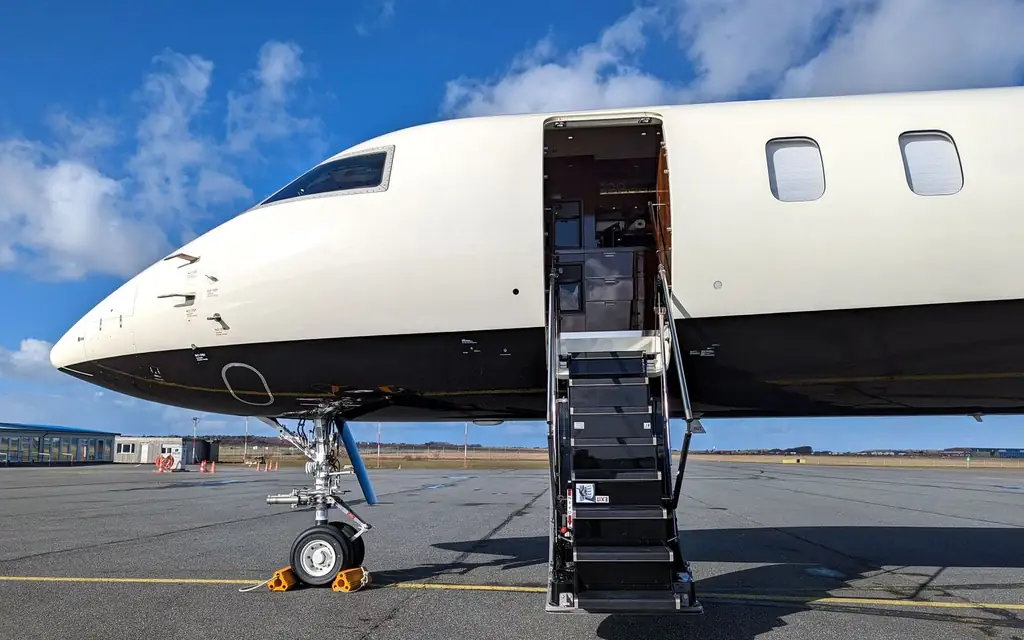
A private jet for musicians is rarely about glamour. On a working tour it is a scheduling tool: it lets an artist play a late show, sleep in a familiar hotel and still make the next city's press call, while the crew, trucks and buses follow a completely different timetable. This guide explains how tour managers decide when to fly, how the aircraft is legally chartered, and how the ground side (artist cars, crew vans, airport runs) is stitched around the flight so nothing waits on anything else.
LimousineWorldwideDirectory.com books the chauffeured legs worldwide and acts as booking agent for charter flights, which are always operated by a licensed air carrier that holds operational control of the aircraft. We do not own or fly aircraft.
How do touring artists use a private jet for musicians?
Most tours keep the crew and production on buses and trucks while the artist and a small party fly charter between shows. The jet usually departs 60 to 90 minutes after the encore from a nearby business-aviation airport, with chauffeured cars meeting the aircraft at each end, so the artist sleeps in a hotel instead of a bunk.
The key idea is separation. The production (lighting, audio, backline, catering) moves on its own clock because it must load out after the show and load in early the next morning. The artist's day is different: interviews, a meet-and-greet, soundcheck, then the show. Flying the artist decouples those two clocks, which is why even tours that never go near a jet card often charter for the toughest jumps.
Fly-back-to-base touring: why some tours sleep in one city
"Hub and spoke" or fly-back-to-base touring means the artist stays in one hotel for several nights and flies out and back for each regional show. A southern California run might base in Los Angeles and fly from Van Nuys to desert, Bay Area and Arizona dates, returning the same night. An East Coast leg might base in Manhattan and fly from Teterboro, roughly 19 km (12 miles) from Midtown and usually 30 to 60 minutes by car depending on the tunnel.
Why do it? Three reasons come up again and again:
- Rest and routine. One room, one gym, one set of familiar faces. For vocalists especially, avoiding a new hotel every night is a health decision.
- Fewer hotel moves for the core party. Luggage stays put, wardrobe stays pressed, and security only has to survey one property.
- Flexibility. If a show runs long or weather closes a small airport, the base hotel is still there.
The trade-off is flight hours. Every show becomes two legs instead of one, so the aircraft bill roughly doubles compared with a linear city-to-city routing. Tour managers usually reserve fly-back-to-base for clusters of shows within about 90 minutes' flying time of the base, and route linearly everywhere else.
Bus, jet or both? Comparing band tour travel options
Most band tour travel uses a mix. The table below shows how the main options compare for a typical arena or theatre run.

| Option | Best for | Strengths | Limits |
|---|---|---|---|
| Sleeper coach overnight | Band and crew on linear routes | Bed and transport in one, no hotel needed | Driver hours cap long jumps; no hotel rest |
| Charter jet after the show | Artist and small core party | Sleep in a hotel, arrive fresh, protect the voice | Cost per hour; needs a nearby business airport |
| Jet plus base hotel | Clusters of shows near one city | One hotel for days, minimal packing | Two flight legs per show |
| Commercial flights | Days off, long gaps, crew rotations | Lowest cost per seat | Fixed schedules, public terminals, bag limits |
| Chauffeured car or Sprinter | Short regional jumps, airport runs | Door to door, flexible stops | Not practical beyond a few hours' drive |
Sleeper buses are governed by commercial driver rules that matter for routing. In the United States, a driver of a passenger-carrying vehicle may not drive more than 10 hours after 8 consecutive hours off duty, or drive at all after 15 hours on duty, with weekly caps of 60 hours in 7 days or 70 hours in 8 days, according to 49 CFR 395.5 on the eCFR. A very long overnight jump can run into that ceiling, which is often the moment the artist flies and the buses take a day off or add a relief driver.
For short regional legs, a Sprinter van with driver or a long-distance car service is often the smartest choice. Nashville to Atlanta by road, for example, is about 400 km (250 miles), roughly four hours of driving, which is close to door-to-door parity with flying once you add airport time at both ends.
Who flies the plane: certificates, D-085 and the 30-seat line
Music tours have historically attracted "too good to be true" charter offers. The FAA's guidance is direct: before booking, ask whether the aircraft is operating on an FAA-issued air carrier or operator certificate, and request a copy of the operator's operations specification D-085 together with the certificate, which together show the aircraft is authorized for charter. The agency's Safe Air Charter article also notes that legal on-demand charters operate under Part 135, with stricter crew training, maintenance and rest requirements than private Part 91 flying. For a deeper look at that distinction, see our guide to Part 135 vs Part 91.
Party size changes the rules too. Under the federal definitions in 14 CFR 110.2, on-demand common carriage covers airplanes with 30 or fewer passenger seats and a payload capacity of 7,500 pounds or less. A touring party of 40 (band, crew chiefs, management, wardrobe, security) needs a larger aircraft operated under "supplemental" rules by a carrier certificated for that work. In practice:
- 4 to 8 people: light or midsize jet, artist and inner circle only.
- 9 to 16 people: super-midsize to large-cabin jet, band plus key crew.
- 30-plus people: an airliner-sized charter from a supplemental operator, usually for international legs or festival runs.
Whatever the size, the operator, not the booking agent, holds operational control: it decides crew duty limits, weather go/no-go and fuel stops.
Need a car for one of these legs? Price it here; the fare is confirmed before you pay.
Planning the ground side: artist cars, crew vans and venue runs
The flight is the easy part. The ground plan is where tours win or lose time, because every leg touches a venue, a hotel and an airport that each have their own access rules.
A typical show-day ground plan includes:
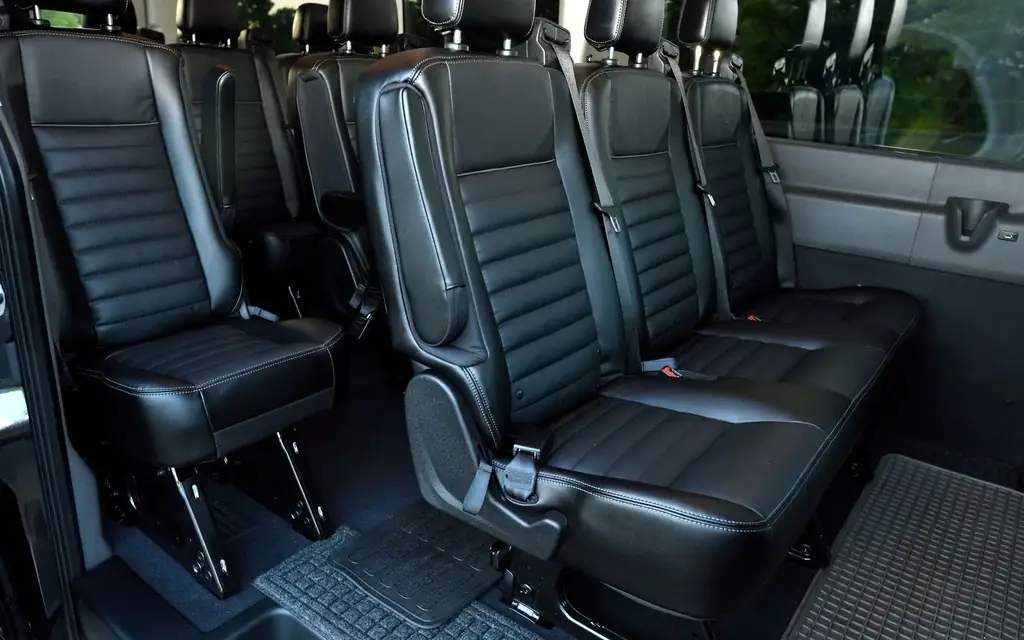
- Hotel to venue for soundcheck in an SUV or sedan, timed to the production schedule rather than the artist's preference.
- Venue holding car on an hourly chauffeur booking, parked at the artist entrance from doors to encore, ready for an early exit.
- Encore to FBO, a direct run to the private terminal with the bags already loaded.
- Planeside or FBO pickup at destination, then hotel.
- Crew and band vans on separate bookings so the artist's car never waits for a late merch count.
Chauffeurs for artist work need briefing on discretion, alternate exits and how to handle fans at hotel doors. Our VIP and celebrity chauffeur service is built around those briefings, and the private jet car service handles FBO pickups where planeside access is permitted.
Show-day timeline: from hotel to stage to wheels-up
Here is a realistic timeline for an arena date with a post-show flight, based on how tour managers typically build the day sheet. Exact times depend on curfew, venue rules and the airport.
- 14:30 Car collects the artist for soundcheck. Driver confirms the artist entrance and the post-show exit route with venue security.
- 17:00 Soundcheck ends; car returns to hotel or the artist stays in the dressing room.
- 20:45 Holding car in position at the artist exit, engine off, driver on standby.
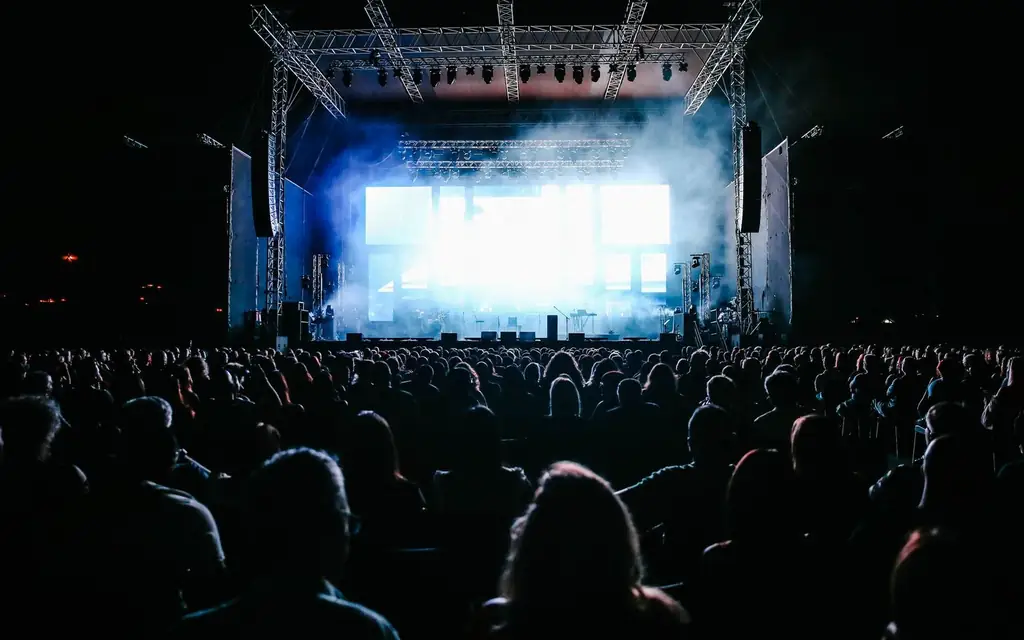
- 22:45 Encore ends. Artist is in the car within minutes if security has cleared the route.
- 23:15 Arrival at the FBO. Passports and IDs were sent to the operator earlier, so boarding is quick.
- 23:45 Wheels-up. A one-hour flight lands around 00:45 local.
- 01:00 Destination car takes the party to the hotel.
Two details save the most time. First, the aircraft should be at the closest suitable business-aviation airport, not the region's biggest airline hub. Second, the arrival car should be booked with the tail number and FBO name so the driver tracks the flight and adjusts. Our meet and greet service covers those handoffs when a team member needs to escort the party through a terminal instead.
Waiting time is built into every booking: 60 minutes free after an international landing, 30 after a domestic one, and 15 for other pickups, so a slightly late departure does not trigger extra charges straight away.
Gear, instruments and borders
Production equipment almost always travels by truck or air freight, but artists often carry a guitar, in-ear monitors and personal electronics on the jet. Baggage space on smaller jets is tighter than most people expect, and hard cases eat volume fast; our guide to private jet baggage limits covers what typically fits by cabin size.
International legs add customs paperwork. U.S. Customs and Border Protection explains that an ATA Carnet lets a traveler or business temporarily import professional equipment without paying duties, is valid for one year from issuance and can be used for multiple entries and exits during that time. CBP's own list of examples includes audio-visual equipment and even an orchestra's touring equipment. Tours that cross between the United States, Canada, the UK and the EU routinely carry one for backline and instruments.
On the ground abroad, the same principle applies to cars as to aircraft: one coordinated booking per city, with drivers who know the venue's loading-dock layout. The global chauffeur service runs those city-by-city bookings under one itinerary, so the tour manager confirms London, Paris and Amsterdam on one thread rather than three.
What tour transportation costs, and where the money goes
Charter pricing is quoted per flight hour plus fees, and the per-hour figure moves with aircraft size and season. As a market indicator, Private Jet Card Comparisons' Q3 2026 survey of entry-level jet cards put average published rates (including fuel surcharges and the 7.5% federal excise tax) at roughly US$7,300 to US$8,400 per hour for very light and light jets, about US$9,600 to US$12,500 for midsize and super-midsize, and around US$14,800 to US$19,400 for large-cabin and ultra-long-range aircraft. On-demand charter quotes can sit above or below those averages depending on repositioning.
Repositioning is the hidden cost in touring. A fly-back-to-base plan keeps the aircraft with the artist, which avoids empty legs, while a linear route may need the jet to fly empty to its next pickup. Tours sometimes recover value on those legs; see how empty leg flights are sold. Every quote should list flight time, positioning, taxes, crew overnight costs and de-icing separately.
Ground costs are more predictable. The online booker shows the exact fare for each car before you confirm, and hourly bookings cover the holding car at the venue. If plans change, the standard ground terms apply: free cancellation more than 72 hours before pickup, 10% inside 72 hours, 50% inside 48 hours, and 100% inside 24 hours or for a no-show.
Privacy and discretion on the road
Tour movements leak easily. Hotel staff, airport spotters and social media all compete to post where an artist is headed. Good practice includes:
- Booking cars and hotel rooms under a tour or production name, with the artist's name known only to the driver who needs it.
- Using FBOs rather than airline terminals, and sharing tail numbers only with the people who must track the flight.
- Asking drivers to confirm instructions by phone with the tour manager, never with fans or other guests at the curb.
The event transportation team applies the same rules to festival weekends such as Coachella, where artist compounds, shuttle loops and private-aviation slots all compete for the same desert roads. Every chauffeured leg is delivered by local operators from our worldwide directory, each vetted, licensed and commercially insured before they collect a tour party.
Sources
- Federal Aviation Administration: Best Super Bowl Play: Avoid Illegal Air Charters
- eCFR: 14 CFR 110.2, Definitions (on-demand and supplemental operations)
- eCFR: 49 CFR 395.5, Maximum driving time for passenger-carrying vehicles
- U.S. Customs and Border Protection: ATA Carnet FAQs
- Private Jet Card Comparisons: Jet Card prices fall 3.1% in Q3 (October 2026)
Frequently asked questions
Do bands fly private for every show?
Very few do. Most tours keep band and crew on sleeper buses and charter only for the artist, or only on jumps that are too long to drive overnight within driver-hour limits. Charter is also common for festival weekends, back-to-back international dates and fly-back-to-base clusters around one city where the artist wants a single hotel for several nights.
What size jet does a touring artist need?
It depends on the party and the luggage. An artist with a manager, security and an assistant usually fits a light or midsize jet. Adding band members and key crew pushes toward super-midsize or large-cabin aircraft. Groups above 30 passengers need an airliner-sized charter from a carrier certificated for supplemental operations.
How soon after the show can the plane leave?
Typically 60 to 90 minutes after the encore, depending on the drive to the airport, security clearance at the artist exit and any airport curfew. Booking a holding car at the venue and sending passenger details to the operator in advance keeps that window short.
Can the car drive onto the ramp to meet the jet?
Sometimes. Planeside access is set by each airport and FBO, and many allow it only for pre-approved, escorted vehicles. When it is not permitted, the chauffeur meets the party at the FBO door. Your booking notes the FBO and tail number so the driver can arrange access where it is allowed.
Who should book the ground transport, the promoter or the tour?
Usually the tour manager books artist cars directly so the plan stays in one place, while promoters sometimes cover local runners. Booking every artist movement through one desk means one itinerary, one invoice per city and one point of contact when a show runs late or a flight is delayed.
Is it cheaper to bus or fly between shows?
Buses are almost always cheaper per person because the coach is also the hotel. Flying costs more but buys rest, which some artists treat as essential for their voice and health. Many tours split the difference: the crew buses, the artist flies only on long or difficult jumps.
Plan the rest of the trip
 Booking WorldwideOnline travel agency · our travel desk partner
Your chauffeur is booked here. Book the rest of the trip in one place: hotels, flights, resorts, activities, packages and car rentals in every country.
Plan your trip